


EN 196-9:2003
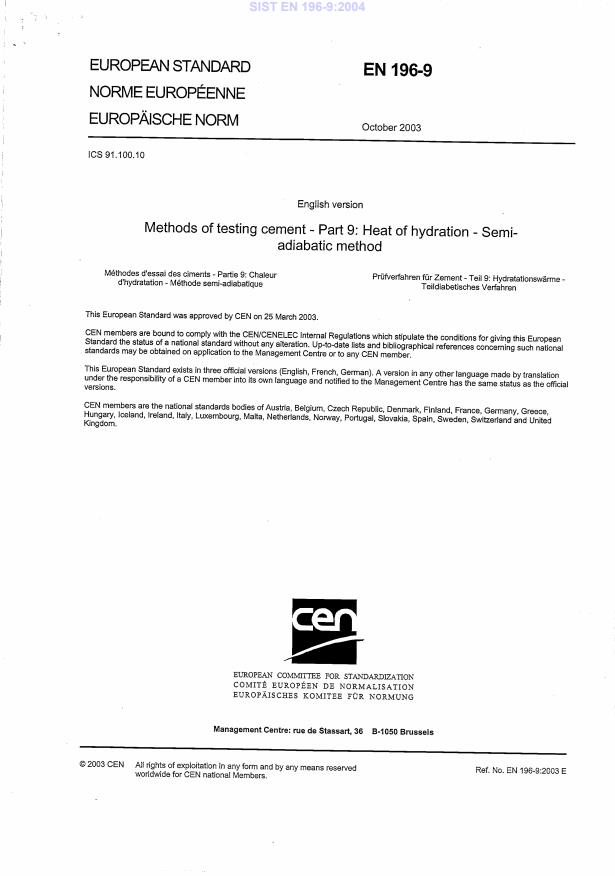
(Main)Methods of testing cement - Part 9: Heat of hydration - Semi-adiabatic method
General Information
- Abstract
This European Standard describes a method of measuring the heat of hydration of cements by means of semi-adiabatic calorimetry, also known as the Langavant method. The aim of the test is the continuous measurement of the heat of hydration of cement during the first few days. The heat of hydration is expressed in joules per gram of cement.
This standard is applicable to all cements and hydraulic binders, whatever their chemical composition, with the exception of quick-setting cements.
NOTE 1 An alternative procedure, called the solution method, is described in EN 196-8. Either procedure can be used independently.
NOTE 2 It has been demonstrated that the best correlation between the two methods is obtained at 41 h for the semi-adiabatic method (EN 196-9) compared with 7 days for the heat of solution method (EN 196-8).
- Status
- Withdrawn
- Publication Date
- 21-Oct-2003
- Withdrawal Date
- 23-Mar-2010
- Technical Committee
- CEN/TC 51 - Cement and building limes
- Drafting Committee
- CEN/TC 51/WG 12 - Special performance criteria
- Current Stage
- 9960 - Withdrawal effective - Withdrawal
- Start Date
- 24-Mar-2010
- Completion Date
- 24-Mar-2010
- Directive
- Harmonized Standard305/2011 - Regulation (eu) No 305/2011 of the European Parliament and of the Council of 9 march 2011 laying down harmonised conditions for the marketing of construction products and repealing council directive 89/106/eec
Not Harmonized89/106/EEC - Construction products

Relations
- Replaced By
EN 196-9:2010 - Methods of testing cement - Part 9: Heat of hydration - Semi-adiabatic method - Effective Date
- 08-Apr-2009
- Effective Date
- 28-Jan-2026
- Effective Date
- 22-Dec-2008
Get Certified
Connect with accredited certification bodies for this standard

DIBt (Deutsches Institut für Bautechnik)
German Institute for Building Technology.
DIN CERTCO
DIN Group product certification.

Aboma Certification B.V.
Specialized in construction, metal, and transport sectors.
Sponsored listings
Frequently Asked Questions
EN 196-9:2003 is a standard published by the European Committee for Standardization (CEN). Its full title is "Methods of testing cement - Part 9: Heat of hydration - Semi-adiabatic method". This standard covers: This European Standard describes a method of measuring the heat of hydration of cements by means of semi-adiabatic calorimetry, also known as the Langavant method. The aim of the test is the continuous measurement of the heat of hydration of cement during the first few days. The heat of hydration is expressed in joules per gram of cement. This standard is applicable to all cements and hydraulic binders, whatever their chemical composition, with the exception of quick-setting cements. NOTE 1 An alternative procedure, called the solution method, is described in EN 196-8. Either procedure can be used independently. NOTE 2 It has been demonstrated that the best correlation between the two methods is obtained at 41 h for the semi-adiabatic method (EN 196-9) compared with 7 days for the heat of solution method (EN 196-8).
This European Standard describes a method of measuring the heat of hydration of cements by means of semi-adiabatic calorimetry, also known as the Langavant method. The aim of the test is the continuous measurement of the heat of hydration of cement during the first few days. The heat of hydration is expressed in joules per gram of cement. This standard is applicable to all cements and hydraulic binders, whatever their chemical composition, with the exception of quick-setting cements. NOTE 1 An alternative procedure, called the solution method, is described in EN 196-8. Either procedure can be used independently. NOTE 2 It has been demonstrated that the best correlation between the two methods is obtained at 41 h for the semi-adiabatic method (EN 196-9) compared with 7 days for the heat of solution method (EN 196-8).
EN 196-9:2003 is classified under the following ICS (International Classification for Standards) categories: 91.100.10 - Cement. Gypsum. Lime. Mortar. The ICS classification helps identify the subject area and facilitates finding related standards.
EN 196-9:2003 has the following relationships with other standards: It is inter standard links to EN 196-9:2010, EN 12715:2000; is excused to EN 196-8:2003. Understanding these relationships helps ensure you are using the most current and applicable version of the standard.
EN 196-9:2003 is associated with the following European legislation: EU Directives/Regulations: 305/2011, 89/106/EEC; Standardization Mandates: M/114. When a standard is cited in the Official Journal of the European Union, products manufactured in conformity with it benefit from a presumption of conformity with the essential requirements of the corresponding EU directive or regulation.
EN 196-9:2003 is available in PDF format for immediate download after purchase. The document can be added to your cart and obtained through the secure checkout process. Digital delivery ensures instant access to the complete standard document.
Standards Content (Sample)
2003-01.Slovenski inštitut za standardizacijo. Razmnoževanje celote ali delov tega standarda ni dovoljeno.Metode preskušanja cementa – 9. del: Toplota hidratacije – Semiadiabatska metodaPrüfverfahren für Zement - Teil 9: Hydratationswärme - Teildiabetisches VerfahrenMéthodes d'essais des ciments - Partie 9: Chaleur d'hydratation - Méthodes semi-adiabatiqueMethods of testing cement - Part 9: Heat of hydration - Semi-adiabatic method91.100.10Cement. Mavec. Apno. MaltaCement. Gypsum. Lime. MortarICS:Ta slovenski standard je istoveten z:EN 196-9:2003
...