


EN 12758:2002
(Main)Glass in building - Glazing and airborne sound insulation - Product descriptions and determination of properties
General Information
- Abstract
This European Standard assigns sound insulation values to all transparent, translucent and opaque glass products, described in European Standards on basic or processed glass products, when intended to be used in glazed assemblies in buildings, and which exhibit properties of acoustic protection, either as a prime intention or as a supplementary characteristic.
This document outlines the procedure, by which glass products may be rated, according to their acoustic performance which enables assessment of compliance with the acoustic requirements of buildings.
Rigorous technical analysis of measurement data remains an option, but this standard is intended to enable the derivation of simpler indices of performance, which can be adopted with confidence by non-specialists.
By adopting the principles of this standard, the formulation of acoustic requirements in Building Codes, and of product specification to satisfy particular needs for glazing is simplified.
It is recognised that the acoustic test procedures of EN ISO 140-1 and EN ISO 140-3 relate fully only to glass panes and their combinations. Although the same principles should be followed as closely as possible, it is inevitable that some compromises are necessary, because of the bulkier construction of other glazing types.
Guidelines on how to adapt these to include glass blocks, bricks, structural glazing, channel-shaped glass and pavers are offered in clause 4.
NOTE Performance variation in windows.
All the considerations of this standard relate to glass alone. Incorporation of them into windows may cause changes in acoustic performance, owing to other influences, including frame design, frame material, mounting method, air tightness, etc. Measurements of the sound insulation of complete windows (glass and frame) may be undertaken to resolve such issues.
- Status
- Withdrawn
- Publication Date
- 09-Jul-2002
- Withdrawal Date
- 25-Jan-2011
- Technical Committee
- CEN/TC 129 - Glass in building
- Drafting Committee
- CEN/TC 129/WG 10 - Sound insulating glazed assemblies
- Current Stage
- 9960 - Withdrawal effective - Withdrawal
- Start Date
- 26-Jan-2011
- Completion Date
- 26-Jan-2011
- Directive
- Harmonized Standard305/2011 - Regulation (eu) No 305/2011 of the European Parliament and of the Council of 9 march 2011 laying down harmonised conditions for the marketing of construction products and repealing council directive 89/106/eec
Not Harmonized89/106/EEC - Construction products

Relations
- Effective Date
- 08-Jun-2022
- Effective Date
- 28-Jan-2026
- Effective Date
- 28-Jan-2026
Get Certified
Connect with accredited certification bodies for this standard

DIBt (Deutsches Institut für Bautechnik)
German Institute for Building Technology.
DIN CERTCO
DIN Group product certification.

Aboma Certification B.V.
Specialized in construction, metal, and transport sectors.
Sponsored listings
Frequently Asked Questions
EN 12758:2002 is a standard published by the European Committee for Standardization (CEN). Its full title is "Glass in building - Glazing and airborne sound insulation - Product descriptions and determination of properties". This standard covers: This European Standard assigns sound insulation values to all transparent, translucent and opaque glass products, described in European Standards on basic or processed glass products, when intended to be used in glazed assemblies in buildings, and which exhibit properties of acoustic protection, either as a prime intention or as a supplementary characteristic. This document outlines the procedure, by which glass products may be rated, according to their acoustic performance which enables assessment of compliance with the acoustic requirements of buildings. Rigorous technical analysis of measurement data remains an option, but this standard is intended to enable the derivation of simpler indices of performance, which can be adopted with confidence by non-specialists. By adopting the principles of this standard, the formulation of acoustic requirements in Building Codes, and of product specification to satisfy particular needs for glazing is simplified. It is recognised that the acoustic test procedures of EN ISO 140-1 and EN ISO 140-3 relate fully only to glass panes and their combinations. Although the same principles should be followed as closely as possible, it is inevitable that some compromises are necessary, because of the bulkier construction of other glazing types. Guidelines on how to adapt these to include glass blocks, bricks, structural glazing, channel-shaped glass and pavers are offered in clause 4. NOTE Performance variation in windows. All the considerations of this standard relate to glass alone. Incorporation of them into windows may cause changes in acoustic performance, owing to other influences, including frame design, frame material, mounting method, air tightness, etc. Measurements of the sound insulation of complete windows (glass and frame) may be undertaken to resolve such issues.
This European Standard assigns sound insulation values to all transparent, translucent and opaque glass products, described in European Standards on basic or processed glass products, when intended to be used in glazed assemblies in buildings, and which exhibit properties of acoustic protection, either as a prime intention or as a supplementary characteristic. This document outlines the procedure, by which glass products may be rated, according to their acoustic performance which enables assessment of compliance with the acoustic requirements of buildings. Rigorous technical analysis of measurement data remains an option, but this standard is intended to enable the derivation of simpler indices of performance, which can be adopted with confidence by non-specialists. By adopting the principles of this standard, the formulation of acoustic requirements in Building Codes, and of product specification to satisfy particular needs for glazing is simplified. It is recognised that the acoustic test procedures of EN ISO 140-1 and EN ISO 140-3 relate fully only to glass panes and their combinations. Although the same principles should be followed as closely as possible, it is inevitable that some compromises are necessary, because of the bulkier construction of other glazing types. Guidelines on how to adapt these to include glass blocks, bricks, structural glazing, channel-shaped glass and pavers are offered in clause 4. NOTE Performance variation in windows. All the considerations of this standard relate to glass alone. Incorporation of them into windows may cause changes in acoustic performance, owing to other influences, including frame design, frame material, mounting method, air tightness, etc. Measurements of the sound insulation of complete windows (glass and frame) may be undertaken to resolve such issues.
EN 12758:2002 is classified under the following ICS (International Classification for Standards) categories: 81.040.20 - Glass in building; 91.120.20 - Acoustics in building. Sound insulation. The ICS classification helps identify the subject area and facilitates finding related standards.
EN 12758:2002 has the following relationships with other standards: It is inter standard links to EN 12758:2011, EN 14351-1:2006+A2:2016, EN 14351-1:2006+A1:2010. Understanding these relationships helps ensure you are using the most current and applicable version of the standard.
EN 12758:2002 is associated with the following European legislation: EU Directives/Regulations: 305/2011, 89/106/EEC; Standardization Mandates: M/135. When a standard is cited in the Official Journal of the European Union, products manufactured in conformity with it benefit from a presumption of conformity with the essential requirements of the corresponding EU directive or regulation.
EN 12758:2002 is available in PDF format for immediate download after purchase. The document can be added to your cart and obtained through the secure checkout process. Digital delivery ensures instant access to the complete standard document.
Standards Content (Sample)
2003-01.Slovenski inštitut za standardizacijo. Razmnoževanje celote ali delov tega standarda ni dovoljeno.Steklo v stavbah – Steklo in izolirnost pred zvokom v zraku – Opis in opredelitev lastnostiGlas im Bauwesen - Glas und Luftschalldämmung - Definitionen und Bestimmung der EigenschaftenVerre dans la construction - Vitrages et isolement acoustique - Descriptions de produits et détermination des propriétésGlass in building - Glazing and airborne sound insulation - Product descriptions and determination of properties91.120.20L]RODFLMDAcoustics in building. Sound insulation81.040.20Steklo v gradbeništvuGlass in buildingICS:Ta slovenski standard je istoveten z:EN 12758:2002SIST EN 12758:2004en01-september-2004SIST EN 12758:2004SLOVENSKI
STANDARD
EUROPEAN STANDARDNORME EUROPÉENNEEUROPÄISCHE NORMEN 12758July 2002ICS 81.040.20; 91.120.20English versionGlass in building - Glazing and airborne sound insulation -Product descriptions and determination of propertiesVerre dans la construction - Vitrages et isolementacoustique - Descriptions de produits et détermination despropriétésGlas im Bauwesen - Glas und Luftschalldämmung -Definitionen und Bestimmung der EigenschaftenThis European Standard was approved by CEN on 28 March 2002.CEN members are bound to comply with the CEN/CENELEC Internal Regulations which stipulate the conditions for giving this EuropeanStandard the status of a national standard without any alteration. Up-to-date lists and bibliographical references concerning such nationalstandards may be obtained on application to the Management Centre or to any CEN member.This European Standard exists in three official versions (English, French, German). A version in any other language made by translationunder the responsibility of a CEN member into its own language and notified to the Management Centre has the same status as the officialversions.CEN members are the national standards bodies of Austria, Belgium, Czech Republic, Denmark, Finland, France, Germany, Greece,Iceland, Ireland, Italy, Luxembourg, Malta, Netherlands, Norway, Portugal, Spain, Sweden, Switzerland and United Kingdom.EUROPEAN COMMITTEE FOR STANDARDIZATIONCOMITÉ EUROPÉEN DE NORMALISATIONEUROPÄISCHES KOMITEE FÜR NORMUNGManagement Centre: rue de Stassart, 36
B-1050 Brussels© 2002 CENAll rights of exploitation in any form and by any means reservedworldwide for CEN national Members.Ref. No. EN 12758:2002 ESIST EN 12758:2004
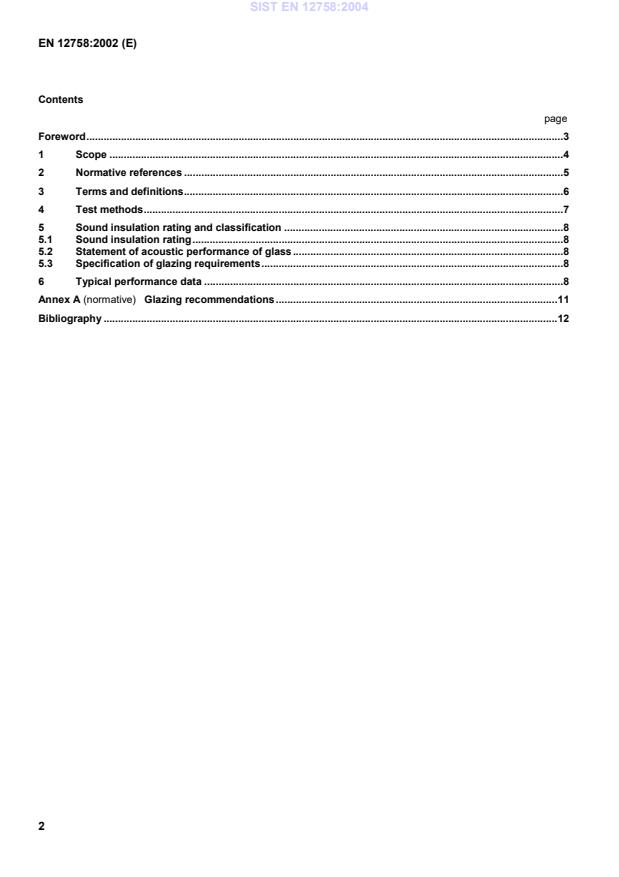
Glazing recommendations.11Bibliography.12SIST EN 12758:2004
...