


EN 16566:2014
(Main)Paints and varnishes - Fillers for internal and/or external works - Adaptation of fillers to European standards
General Information
- Abstract
This European Standard defines coating materials designed to cover all backgrounds and substrates in traditional materials or compliant with the standards in force, whether new or existing, bare or coated, absorbent or non-absorbent, smooth or rough, in order to prepare them to receive a paint or related system, or a bonded cover, whether specific or not. More generally intended to improve the surface appearance, they can also:
- not be over-coated;
- create a textured appearance or not;
- be treated/coloured or not (pigments, wax, etc.).
Exterior fillers are not intended as top coat.
Interior coating materials with grain size over 1 mm are not covered by this European Standard.
Fillers specifically intended for wooden and metal substrates are not covered by this European Standard.
This European Standard complies with the general system for classification of water-borne coating materials and coating systems for interior walls and ceilings described in EN 13300.
This European Standard complies with the general system for the description of coating materials and coating systems for exterior masonry and concrete described in EN 1062 1.
The essential function of fillers is therefore a decorative function. Therefore, these fillers are considered here as preparatory and/or decorative fillers, of smooth or textured appearance.
NOTE Nothing prevents preparatory surface filler from being coated with a paint system comprising protective functions.
However, they are not suitable for truing of backgrounds, without specifications regarding the verticality, angularity or flatness under a 2-m straight edge, or thickness. Their application never requires, to ensure they bond correctly, the prior application of a rigid reinforcement such as a lathwork or wire mesh, or a spatter-dash or bagging or scoring of the surface between two coats. They may nevertheless incorporate a flexible reinforcement (strip of natural or synthetic fabric) for example along joints between different or same materials, in order to limit visible cracking.
Under these conditions, this European Standard does not concern products covered by the following standards: EN 998 1, EN 998 2, EN 15824, EN 13279 1, EN 13963, EN 12860, EN 13813, EN ISO 11600.
- Status
- Published
- Publication Date
- 27-May-2014
- Technical Committee
- CEN/TC 139 - Paints and varnishes
- Drafting Committee
- CEN/TC 139/WG 1 - Coating systems for masonry
- Current Stage
- 9060 - Closure of 2 Year Review Enquiry - Review Enquiry
- Start Date
- 04-Jun-2026
- Completion Date
- 04-Jun-2026

Overview
EN 16566:2014 (CEN) specifies the definition, characteristics and classification of fillers for internal and/or external works used in paints and varnishes. It covers factory-made fillers (powder or paste; water- or solvent‑borne; mono- or multi‑component) intended primarily to improve surface appearance and prepare substrates to receive a paint system or bonded cover. The standard focuses on decorative and preparatory fillers (smooth or textured) and sets a common framework for manufacturers and users to describe and assess filler performance.
Key points:
- Applies to fillers for masonry, concrete and traditional building backgrounds (new or existing, absorbent or non‑absorbent).
- Exclusions: fillers specifically for wood or metal, interior fillers with grain size > 1 mm, and products covered by other construction standards (see Related Standards).
- Exterior fillers are not intended to serve as final top coats.
Key topics and technical requirements
EN 16566:2014 defines the information and test methods needed to classify and communicate filler properties. Important technical topics include:
- Product description and designation - Manufacturer must supply brand, intended use (interior/exterior), product type and a designation code covering core properties (e.g., gloss G, grain size S, water‑vapour transmission V, liquid water permeability W, crack‑bridging A, CO2 permeability C, wet‑scrub resistance R).
- Gloss - Measured per EN ISO 2813 and classified per EN 1062‑1 (G classes).
- Grain size (texture) - Classified S1–S3 based on particle size that affects texture/applicability.
- Water‑vapour permeability (V) - Measured to EN ISO 7783; exterior fillers should meet V1 or V2 where required.
- Liquid water permeability (W) - Measured per EN 1062‑3; hydrophobic claims require declaration (W2/W3).
- Crack‑bridging (A) - Assessed by EN 1062‑7 when claimed (A1–A5).
- CO2 permeability (C) - Measured per EN 1062‑6 when claimed.
- Adhesion/cohesion - Pull‑off tests per EN ISO 4624 (e.g., minimum mean values are specified - typically ≥0.5 MPa for interior and ≈0.8 MPa for exterior fillers), with additional freeze–thaw assessment (EN 13687‑3) where applicable.
- Compatibility with classification systems - Aligns with EN 13300 (interior systems) and EN 1062‑1 (exterior masonry/concrete).
Applications and who uses this standard
EN 16566:2014 is practical for:
- Manufacturers - to declare product performance, create data sheets and ensure comparability across markets.
- Specifiers and architects - to select fillers that meet aesthetic and performance needs (texture, vapour permeability, water resistance).
- Contractors and applicators - to follow manufacturer recommendations for application, thickness and substrate preparation.
- Test laboratories and compliance bodies - to verify claims using referenced EN/ISO test methods.
Typical uses: decorative surfacing, levelling, patching, blow‑hole filling, smoothing and non‑structural repairs on masonry and concrete surfaces.
Related Standards
- EN 1062‑1, EN 1062‑3, EN 1062‑6, EN 1062‑7
- EN 13300 (interior classification)
- EN ISO 2813, EN ISO 4624, EN ISO 7783, EN ISO 11998
- EN 13687‑3 (freeze–thaw)
- Excluded product standards: EN 998‑1, EN 998‑2, EN 15824, EN 13279‑1, EN 13963, EN 12860, EN 13813, EN ISO 11600
Keywords: EN 16566:2014, fillers, paint fillers, interior and exterior fillers, coating materials, classification, water‑vapour permeability, liquid water permeability, crack‑bridging, gloss, grain size, adhesion.
Relations
- Effective Date
- 28-Jan-2026
- Effective Date
- 28-Jan-2026
- Effective Date
- 28-Jan-2026
- Effective Date
- 28-Jan-2026
- Effective Date
- 28-Jan-2026
- Effective Date
- 28-Jan-2026
- Effective Date
- 28-Jan-2026
Get Certified
Connect with accredited certification bodies for this standard

DIBt (Deutsches Institut für Bautechnik)
German Institute for Building Technology.
DIN CERTCO
DIN Group product certification.

Aboma Certification B.V.
Specialized in construction, metal, and transport sectors.
Sponsored listings
Frequently Asked Questions
EN 16566:2014 is a standard published by the European Committee for Standardization (CEN). Its full title is "Paints and varnishes - Fillers for internal and/or external works - Adaptation of fillers to European standards". This standard covers: This European Standard defines coating materials designed to cover all backgrounds and substrates in traditional materials or compliant with the standards in force, whether new or existing, bare or coated, absorbent or non-absorbent, smooth or rough, in order to prepare them to receive a paint or related system, or a bonded cover, whether specific or not. More generally intended to improve the surface appearance, they can also: - not be over-coated; - create a textured appearance or not; - be treated/coloured or not (pigments, wax, etc.). Exterior fillers are not intended as top coat. Interior coating materials with grain size over 1 mm are not covered by this European Standard. Fillers specifically intended for wooden and metal substrates are not covered by this European Standard. This European Standard complies with the general system for classification of water-borne coating materials and coating systems for interior walls and ceilings described in EN 13300. This European Standard complies with the general system for the description of coating materials and coating systems for exterior masonry and concrete described in EN 1062 1. The essential function of fillers is therefore a decorative function. Therefore, these fillers are considered here as preparatory and/or decorative fillers, of smooth or textured appearance. NOTE Nothing prevents preparatory surface filler from being coated with a paint system comprising protective functions. However, they are not suitable for truing of backgrounds, without specifications regarding the verticality, angularity or flatness under a 2-m straight edge, or thickness. Their application never requires, to ensure they bond correctly, the prior application of a rigid reinforcement such as a lathwork or wire mesh, or a spatter-dash or bagging or scoring of the surface between two coats. They may nevertheless incorporate a flexible reinforcement (strip of natural or synthetic fabric) for example along joints between different or same materials, in order to limit visible cracking. Under these conditions, this European Standard does not concern products covered by the following standards: EN 998 1, EN 998 2, EN 15824, EN 13279 1, EN 13963, EN 12860, EN 13813, EN ISO 11600.
This European Standard defines coating materials designed to cover all backgrounds and substrates in traditional materials or compliant with the standards in force, whether new or existing, bare or coated, absorbent or non-absorbent, smooth or rough, in order to prepare them to receive a paint or related system, or a bonded cover, whether specific or not. More generally intended to improve the surface appearance, they can also: - not be over-coated; - create a textured appearance or not; - be treated/coloured or not (pigments, wax, etc.). Exterior fillers are not intended as top coat. Interior coating materials with grain size over 1 mm are not covered by this European Standard. Fillers specifically intended for wooden and metal substrates are not covered by this European Standard. This European Standard complies with the general system for classification of water-borne coating materials and coating systems for interior walls and ceilings described in EN 13300. This European Standard complies with the general system for the description of coating materials and coating systems for exterior masonry and concrete described in EN 1062 1. The essential function of fillers is therefore a decorative function. Therefore, these fillers are considered here as preparatory and/or decorative fillers, of smooth or textured appearance. NOTE Nothing prevents preparatory surface filler from being coated with a paint system comprising protective functions. However, they are not suitable for truing of backgrounds, without specifications regarding the verticality, angularity or flatness under a 2-m straight edge, or thickness. Their application never requires, to ensure they bond correctly, the prior application of a rigid reinforcement such as a lathwork or wire mesh, or a spatter-dash or bagging or scoring of the surface between two coats. They may nevertheless incorporate a flexible reinforcement (strip of natural or synthetic fabric) for example along joints between different or same materials, in order to limit visible cracking. Under these conditions, this European Standard does not concern products covered by the following standards: EN 998 1, EN 998 2, EN 15824, EN 13279 1, EN 13963, EN 12860, EN 13813, EN ISO 11600.
EN 16566:2014 is classified under the following ICS (International Classification for Standards) categories: 91.100.99 - Other construction materials. The ICS classification helps identify the subject area and facilitates finding related standards.
EN 16566:2014 has the following relationships with other standards: It is inter standard links to EN ISO 11998:2006, EN ISO 4624:2023, EN 1062-1:2004, EN 13687-3:2002, EN ISO 7783:2018, EN ISO 2813:2014, EN 1062-3:2008. Understanding these relationships helps ensure you are using the most current and applicable version of the standard.
EN 16566:2014 is available in PDF format for immediate download after purchase. The document can be added to your cart and obtained through the secure checkout process. Digital delivery ensures instant access to the complete standard document.
Standards Content (Sample)
2003-01.Slovenski inštitut za standardizacijo. Razmnoževanje celote ali delov tega standarda ni dovoljeno.Barve in laki - Polnila za notranja in/ali zunanja dela - Prilagoditev polnil evropskim standardomBeschichtungsstoffe - Spachtelmassen bei Innen- und/oder Außenarbeiten - Anpassung der Spachtelmassen an die europäischen NormenPeintures et vernis - Enduits de peinture pour travaux intérieurs et/ou extérieurs - Adaptation des enduits de peinture aux Normes européennesPaints and varnishes - Fillers for internal and/or external works - Adaptation of fillers to European standards91.100.99Drugi gradbeni materialiOther construction materials87.040Barve in lakiPaints and varnishesICS:Ta slovenski standard je istoveten z:EN 16566:2014SIST EN 16566:2014en,fr,de01-julij-2014SIST EN 16566:2014SLOVENSKI
STANDARD
EUROPEAN STANDARD NORME EUROPÉENNE EUROPÄISCHE NORM
EN 16566
May 2014 ICS 91.100.99 English Version
Paints and varnishes - Fillers for internal and/or external works -Adaptation of fillers to European standards
Peintures et vernis - Enduits de peinture pour travaux intérieurs et/ou extérieurs - Adaptation des enduits de peinture aux Normes européennes
Beschichtungsstoffe - Spachtelmassen bei Innen- und/oder Außenarbeiten - Anpassung der Spachtelmassen an die europäischen Normen This European Standard was approved by CEN on 17 April 2014.
CEN members are bound to comply with the CEN/CENELEC Internal Regulations which stipulate the conditions for giving this European Standard the status of a national standard without any alteration. Up-to-date lists and bibliographical references concerning such national standards may be obtained on application to the CEN-CENELEC Management Centre or to any CEN member.
This European Standard exists in three official versions (English, French, German). A version in any other language made by translation under the responsibility of a CEN member into its own language and notified to the CEN-CENELEC Management Centre has the same status as the official versions.
CEN members are the national standards bodies of Austria, Belgium, Bulgaria, Croatia, Cyprus, Czech Republic, Denmark, Estonia, Finland, Former Yugoslav Republic of Macedonia, France, Germany, Greece, Hungary, Iceland, Ireland, Italy, Latvia, Lithuania, Luxembourg, Malta, Netherlands, Norway, Poland, Portugal, Romania, Slovakia, Slovenia, Spain, Sweden, Switzerland, Turkey and United Kingdom.
EUROPEAN COMMITTEE FOR STANDARDIZATION
COMITÉ EUROPÉEN DE NORMALISATION EUROPÄISCHES KOMITEE FÜR NORMUNG
CEN-CENELEC Management Centre:
Avenue Marnix 17,
B-1000 Brussels © 2014 CEN All rights of exploitation in any form and by any means reserved worldwide for CEN national Members. Ref. No. EN 16566:2014 ESIST EN 16566:2014
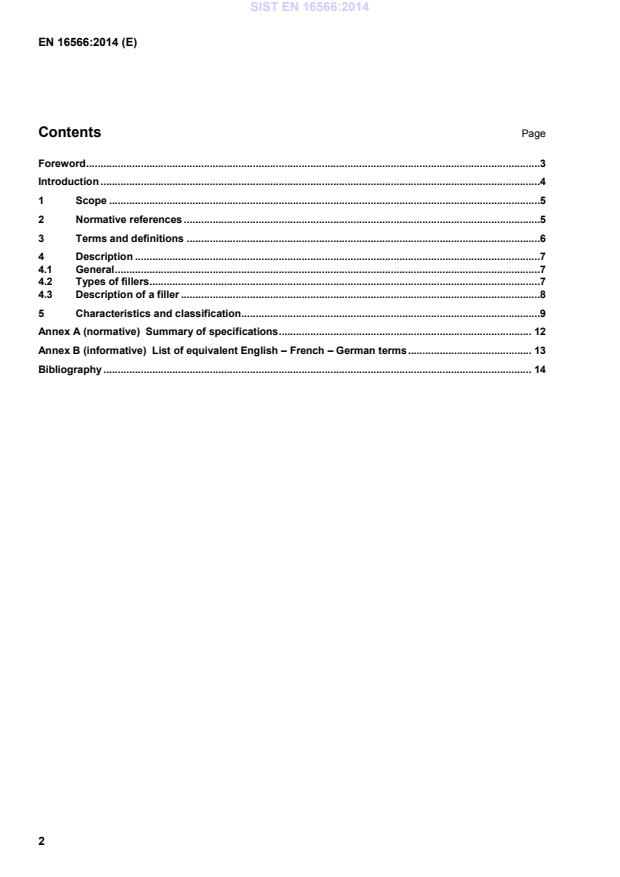
Summary of specifications . 12 Annex B (informative)
List of equivalent English – French – German terms . 13 Bibliography . 14
Coating materials and coating systems for exterior masonry and concrete
Part 1: Classification EN 1062-3, Paints and varnishes Coating materials and coating systems for exterior masonry and concrete
Part 3: Determination of liquid water permeability EN 13687-3, Products and systems for the protection and repair of concrete structures
Test methods
Determination of thermal compatibility
Part 3: Thermal cycling without de-icing salt impact SIST EN 16566:2014
Determination of specular gloss of non-metallic paint films at 20°, 60° and 85° (ISO 2813) EN ISO 4624, Paints and varnishes
Pull-off test for adhesion (ISO 4624) EN ISO 7783, Paints and varnishes
Determination of water-vapour transmission properties
Cup method (ISO 7783) EN ISO 11998, Paints and varnishes
Determination of wet-scrub resistance and cleanability of coatings (ISO 11998) 3 Terms and definitions For the purposes of this document, the following terms and definitions apply. 3.1 coating material product in liquid, paste or powder form, that, when applied to a substrate, forms a film possessing protective, decorative and/or other specific properties [SOURCE: EN ISO 4618, 2.50] 3.2 coat continuous layer of a coating material resulting from a single application [SOURCE: EN ISO 4618, 2.48] 3.3 coating film continuous layer formed from a single or multiple application of a coating material to a substrate [SOURCE: EN ISO 4618, 2.49] Note 1 to entry: The term “film” is rarely employed for a coat of filler or a coating by filling/surfacing. 3.4 filler coating material with a high proportion of extender, in powder or paste form, intended primarily to even out irregularities in substrates both internally and externally and/or to improve their surface appearance in order to prepare them to receive when required a paint or related system or bonded cover Note 1 to entry: According to this definition, the product in question may be covered by wall paper or other decorative materials, or not over-coated, resulting in a textured coating left as it is or coloured in its bulk. 3.5 filler system series of filler coats that are applied to a substrate 3.6 substrate surface to which a coating material is applied or is to be applied [SOURCE: EN ISO 4618, 2.219] SIST EN 16566:2014
...