


IEC TS 62607-6-28:2025
(Main)Nanomanufacturing - Key control characteristics - Part 6-28: Graphene-related products - Number of layers for graphene films on a substrate: Raman spectroscopy
General Information
- Abstract
IEC TS 62607-6-28:2025, which is a Technical Specification, establishes two standardized methods to determine the key control characteristic
• number of layers
for graphene layers by
• Raman spectroscopy.
This document presents two complementary methods for determining the number of layers in graphene-related products: Method A, which analyzes the lineshape of the 2D-peak in the Raman spectrum, and Method B, which measures the Raman intensity from the underlying silicon substrate. The two methods can be employed individually but combining both methods enhances accuracy and extends the detection range for the number of layers and stacking configurations.
- The method is intended to be used for graphene layers prepared by mechanical exfoliation, but also can be used with care for other high quality graphene layers, such as graphene layers prepared by chemical vapor deposition.
- The method can be used for graphene layers with AB and ABC stacking on a substrate. Its lateral size should be at least 2 µm.
- Method A is effective for AB stacked graphene up to 4 layers but becomes less reliable with more layers due to peak overlap.
- Method B can detect up to 10 layers in AB and ABC stacking but oxidized silicon substrate (SiO2 on silicon substrate) is required.
- The comparison of Method A and Method B can be found in Annex A.
- Status
- Published
- Publication Date
- 25-Sep-2025
- Technical Committee
- TC 113 - Nanotechnology for electrotechnical products and systems
- Drafting Committee
- WG 8 - TC 113/WG 8
- Current Stage
- PPUB - Publication issued
- Start Date
- 26-Sep-2025
- Completion Date
- 17-Oct-2025
Buy Documents
IEC TS 62607-6-28:2025 - Nanomanufacturing - Key control characteristics - Part 6-28: Graphene-related products - Number of layers for graphene films on a substrate: Raman spectroscopy Released:9/26/2025
Overview
IEC TS 62607-6-28:2025 is a Technical Specification in the IEC 62607 nanomanufacturing series that defines standardized Raman spectroscopy methods to determine the number of layers in graphene films on a substrate. The document specifies two complementary techniques - Method A (2D‑peak lineshape analysis) and Method B (Raman intensity from underlying silicon) - and guidance on sample preparation, instrumentation, calibration and reporting for reliable layer-counting of graphene‑related products.
Key topics and requirements
- Scope: Determines the key control characteristic (KCC) - number of graphene layers - using Raman spectroscopy for graphene films prepared primarily by mechanical exfoliation, and, with care, high‑quality CVD graphene.
- Spectral markers: Uses the prominent Raman peaks (D ~1 350 cm‑1, G ~1 580 cm‑1, 2D ~2 700 cm‑1) as measurement indicators; peak shape, position and intensity ratios are central to analysis.
- Method A - 2D‑peak lineshape:
- Analyzes the 2D (G′) peak lineshape.
- Effective for AB‑stacked graphene up to 4 layers; becomes less reliable beyond 4 layers due to peak overlap.
- Lateral sample size should be ≥ 2 µm.
- Method B - substrate Si intensity ratio:
- Measures the Raman intensity ratio I(Si beneath graphene)/I(Si bare).
- Detects up to 10 layers for both AB and ABC stacking.
- Requires oxidized silicon substrate (SiO2 on Si) for reliable interference-based intensity modelling.
- Combination: Applying both methods together improves accuracy and extends detection range and stacking identification. Annex A provides a comparison; other annexes cover theory, calibration, example reports and calculations.
- Reporting and metrology: Includes calibration procedures, ambient conditions, detailed measurement procedures and a standardized test report format for traceable results.
Applications and users
- Quality control and process monitoring in graphene manufacturing (exfoliation, CVD).
- Research and development in nanomaterials, optoelectronics and sensors where layer count controls performance.
- Metrology and characterization laboratories using Raman spectroscopy for material verification.
- Instrument manufacturers, standards bodies and certification labs seeking harmonized measurement workflows.
Related standards
- Part of the IEC 62607 – Nanomanufacturing – Key control characteristics series; users should consult other parts of IEC 62607 for complementary KCCs and general nanomanufacturing guidance.
Keywords: IEC TS 62607-6-28:2025, Raman spectroscopy, graphene layers, number of layers, Method A, Method B, AB stacking, ABC stacking, SiO2 on Si, nanomanufacturing, graphene characterization.
Buy Documents
IEC TS 62607-6-28:2025 - Nanomanufacturing - Key control characteristics - Part 6-28: Graphene-related products - Number of layers for graphene films on a substrate: Raman spectroscopy Released:9/26/2025
Frequently Asked Questions
IEC TS 62607-6-28:2025 is a technical specification published by the International Electrotechnical Commission (IEC). Its full title is "Nanomanufacturing - Key control characteristics - Part 6-28: Graphene-related products - Number of layers for graphene films on a substrate: Raman spectroscopy". This standard covers: IEC TS 62607-6-28:2025, which is a Technical Specification, establishes two standardized methods to determine the key control characteristic • number of layers for graphene layers by • Raman spectroscopy. This document presents two complementary methods for determining the number of layers in graphene-related products: Method A, which analyzes the lineshape of the 2D-peak in the Raman spectrum, and Method B, which measures the Raman intensity from the underlying silicon substrate. The two methods can be employed individually but combining both methods enhances accuracy and extends the detection range for the number of layers and stacking configurations. - The method is intended to be used for graphene layers prepared by mechanical exfoliation, but also can be used with care for other high quality graphene layers, such as graphene layers prepared by chemical vapor deposition. - The method can be used for graphene layers with AB and ABC stacking on a substrate. Its lateral size should be at least 2 µm. - Method A is effective for AB stacked graphene up to 4 layers but becomes less reliable with more layers due to peak overlap. - Method B can detect up to 10 layers in AB and ABC stacking but oxidized silicon substrate (SiO2 on silicon substrate) is required. - The comparison of Method A and Method B can be found in Annex A.
IEC TS 62607-6-28:2025, which is a Technical Specification, establishes two standardized methods to determine the key control characteristic • number of layers for graphene layers by • Raman spectroscopy. This document presents two complementary methods for determining the number of layers in graphene-related products: Method A, which analyzes the lineshape of the 2D-peak in the Raman spectrum, and Method B, which measures the Raman intensity from the underlying silicon substrate. The two methods can be employed individually but combining both methods enhances accuracy and extends the detection range for the number of layers and stacking configurations. - The method is intended to be used for graphene layers prepared by mechanical exfoliation, but also can be used with care for other high quality graphene layers, such as graphene layers prepared by chemical vapor deposition. - The method can be used for graphene layers with AB and ABC stacking on a substrate. Its lateral size should be at least 2 µm. - Method A is effective for AB stacked graphene up to 4 layers but becomes less reliable with more layers due to peak overlap. - Method B can detect up to 10 layers in AB and ABC stacking but oxidized silicon substrate (SiO2 on silicon substrate) is required. - The comparison of Method A and Method B can be found in Annex A.
IEC TS 62607-6-28:2025 is classified under the following ICS (International Classification for Standards) categories: 07.120 - Nanotechnologies. The ICS classification helps identify the subject area and facilitates finding related standards.
IEC TS 62607-6-28:2025 is available in PDF format for immediate download after purchase. The document can be added to your cart and obtained through the secure checkout process. Digital delivery ensures instant access to the complete standard document.
Standards Content (Sample)
IEC TS 62607-6-28 ®
Edition 1.0 2025-09
TECHNICAL
SPECIFICATION
Nanomanufacturing - Key control characteristics -
Part 6-28: Graphene-related products - Number of layers for graphene films on a
substrate: Raman spectroscopy
ICS 07.120 ISBN 978-2-8327-0740-1
All rights reserved. Unless otherwise specified, no part of this publication may be reproduced or utilized in any form or
by any means, electronic or mechanical, including photocopying and microfilm, without permission in writing from either
IEC or IEC's member National Committee in the country of the requester. If you have any questions about IEC copyright
or have an enquiry about obtaining additional rights to this publication, please contact the address below or your local
IEC member National Committee for further information.
IEC Secretariat Tel.: +41 22 919 02 11
3, rue de Varembé info@iec.ch
CH-1211 Geneva 20 www.iec.ch
Switzerland
About the IEC
The International Electrotechnical Commission (IEC) is the leading global organization that prepares and publishes
International Standards for all electrical, electronic and related technologies.
About IEC publications
The technical content of IEC publications is kept under constant review by the IEC. Please make sure that you have the
latest edition, a corrigendum or an amendment might have been published.
IEC publications search - IEC Products & Services Portal - products.iec.ch
webstore.iec.ch/advsearchform Discover our powerful search engine and read freely all the
The advanced search enables to find IEC publications by a
publications previews, graphical symbols and the glossary.
variety of criteria (reference number, text, technical With a subscription you will always have access to up to date
committee, …). It also gives information on projects, content tailored to your needs.
replaced and withdrawn publications.
Electropedia - www.electropedia.org
IEC Just Published - webstore.iec.ch/justpublished The world's leading online dictionary on electrotechnology,
Stay up to date on all new IEC publications. Just Published containing more than 22 500 terminological entries in English
details all new publications released. Available online and and French, with equivalent terms in 25 additional languages.
once a month by email. Also known as the International Electrotechnical Vocabulary
(IEV) online.
IEC Customer Service Centre - webstore.iec.ch/csc
If you wish to give us your feedback on this publication or
need further assistance, please contact the Customer
Service Centre: sales@iec.ch.
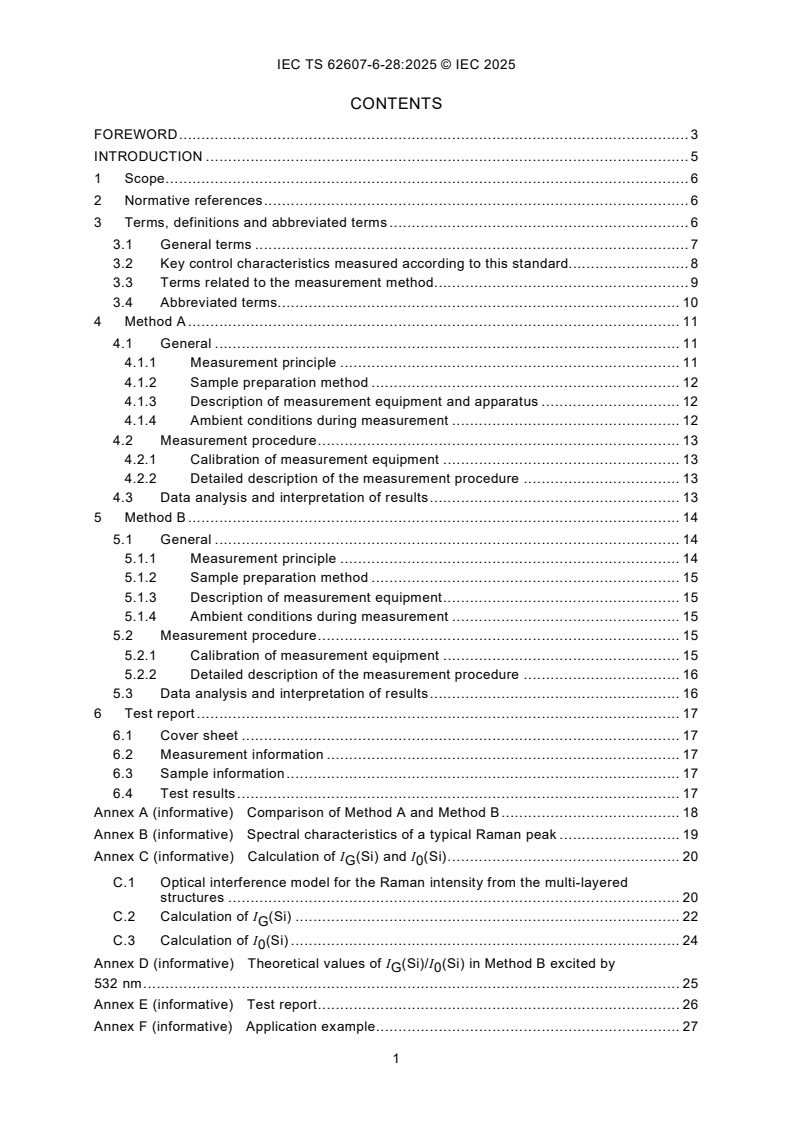
CONTENTS
FOREWORD . 3
INTRODUCTION . 5
1 Scope . 6
2 Normative references . 6
3 Terms, definitions and abbreviated terms . 6
3.1 General terms . 7
3.2 Key control characteristics measured according to this standard. 8
3.3 Terms related to the measurement method . 9
3.4 Abbreviated terms. 10
4 Method A . 11
4.1 General . 11
4.1.1 Measurement principle . 11
4.1.2 Sample preparation method . 12
4.1.3 Description of measurement equipment and apparatus . 12
4.1.4 Ambient conditions during measurement . 12
4.2 Measurement procedure . 13
4.2.1 Calibration of measurement equipment . 13
4.2.2 Detailed description of the measurement procedure . 13
4.3 Data analysis and interpretation of results . 13
5 Method B . 14
5.1 General . 14
5.1.1 Measurement principle . 14
5.1.2 Sample preparation method . 15
5.1.3 Description of measurement equipment . 15
5.1.4 Ambient conditions during measurement . 15
5.2 Measurement procedure . 15
5.2.1 Calibration of measurement equipment . 15
5.2.2 Detailed description of the measurement procedure . 16
5.3 Data analysis and interpretation of results . 16
6 Test report . 17
6.1 Cover sheet . 17
6.2 Measurement information . 17
6.3 Sample information . 17
6.4 Test results . 17
Annex A (informative) Comparison of Method A and Method B . 18
Annex B (informative) Spectral characteristics of a typical Raman peak . 19
Annex C (informative) Calculation of I (Si) and I (Si) . 20
G 0
C.1 Optical interference model for the Raman intensity from the multi-layered
structures . 20
C.2 Calculation of I (Si) . 22
G
C.3 Calculation of I (Si) . 24
Annex D (informative) Theoretical values of I (Si)/I (Si) in Method B excited by
G 0
532 nm . 25
Annex E (informative) Test report . 26
Annex F (informative) Application example . 27
F.1 Application example 1 . 27
F.2 Application example 2 . 28
Bibliography . 31
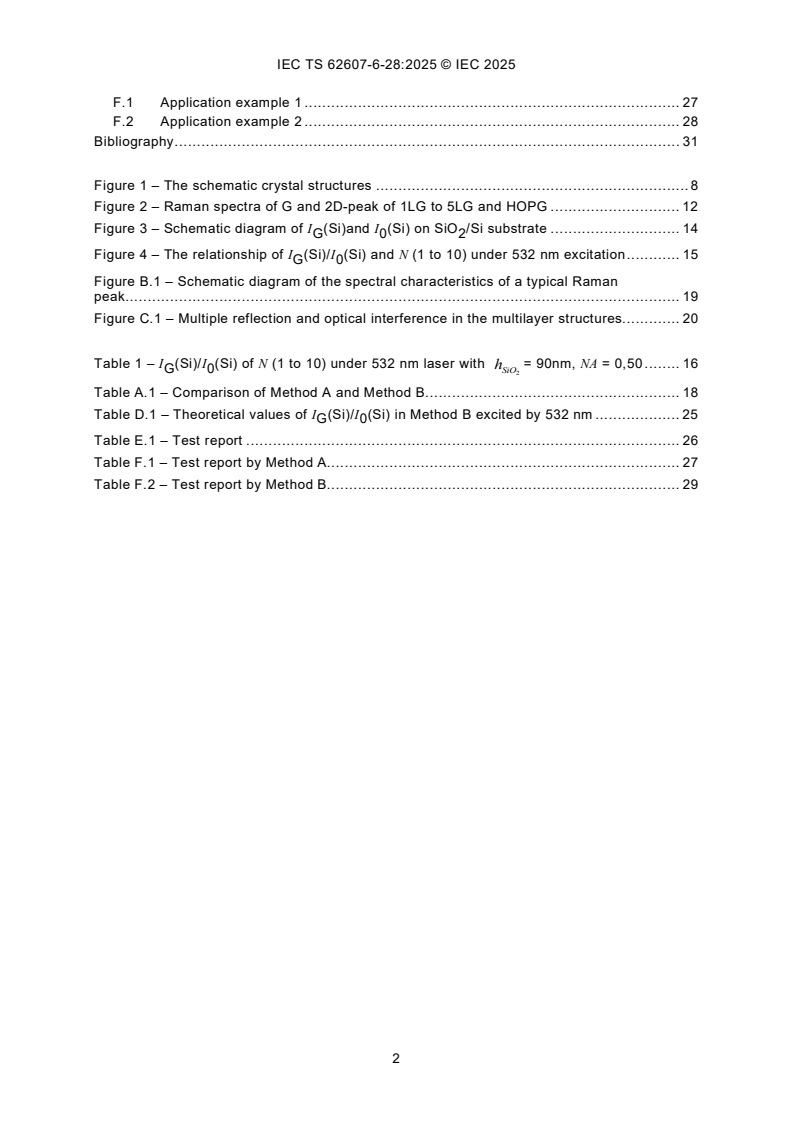
Figure 1 – The schematic crystal structures . 8
Figure 2 – Raman spectra of G and 2D-peak of 1LG to 5LG and HOPG . 12
Figure 3 – Schematic diagram of I (Si)and I (Si) on SiO /Si substrate . 14
G 0 2
Figure 4 – The relationship of I (Si)/I (Si) and N (1 to 10) under 532 nm excitation . 15
G 0
Figure B.1 – Schematic diagram of the spectral characteristics of a typical Raman
peak. 19
Figure C.1 – Multiple reflection and optical interference in the multilayer structures. . 20
Table 1 – I (Si)/I (Si) of N (1 to 10) under 532 nm laser with = 90nm, NA = 0,50 . 16
h
G 0
SiO
Table A.1 – Comparison of Method A and Method B . 18
Table D.1 – Theoretical values of I (Si)/I (Si) in Method B excited by 532 nm . 25
G 0
Table E.1 – Test report . 26
Table F.1 – Test report by Method A. 27
Table F.2 – Test report by Method B. 29
INTERNATIONAL ELECTROTECHNICAL COMMISSION
____________
Nanomanufacturing -
Key control characteristics -
Part 6-28: Graphene-related products -
Number of layers for graphene films on a substrate: Raman spectroscopy
FOREWORD
1) The International Electrotechnical Commission (IEC) is a worldwide organization for standardization comprising
all national electrotechnical committees (IEC National Committees). The object of IEC is to promote international
co-operation on all questions concerning standardization in the electrical and electronic fields. To this end and
in addition to other activities, IEC publishes International Standards, Technical Specifications, Technical Reports,
Publicly Available Specifications (PAS) and Guides (hereafter referred to as “IEC Publication(s)”). Their
preparation is entrusted to technical committees; any IEC National Committee interested in the subject dealt with
may participate in this preparatory work. International, governmental and non-governmental organizations liaising
with the IEC also participate in this preparation. IEC collaborates closely with the International Organization for
Standardization (ISO) in accordance with conditions determined by agreement between the two organizations.
2) The formal decisions or agreements of IEC on technical matters express, as nearly as possible, an international
consensus of opinion on the relevant subjects since each technical committee has representation from all
interested IEC National Committees.
3) IEC Publications have the form of recommendations for international use and are accepted by IEC National
Committees in that sense. While all reasonable efforts are made to ensure that the technical content of IEC
Publications is accurate, IEC cannot be held responsible for the way in which they are used or for any
misinterpretation by any end user.
4) In order to promote international uniformity, IEC National Committees undertake to apply IEC Publications
transparently to the maximum extent possible in their national and regional publications. Any divergence between
any IEC Publication and the corresponding national or regional publication shall be clearly indicated in the latter.
5) IEC itself does not provide any attestation of conformity. Independent certification bodies provide conformity
assessment services and, in some areas, access to IEC marks of conformity. IEC is not responsible for any
services carried out by independent certification bodies.
6) All users should ensure that they have the latest edition of this publication.
7) No liability shall attach to IEC or its directors, employees, servants or agents including individual experts and
members of its technical committees and IEC National Committees for any personal injury, property damage or
other damage of any nature whatsoever, whether direct or indirect, or for costs (including legal fees) and
expenses arising out of the publication, use of, or reliance upon, this IEC Publication or any other IEC
Publications.
8) Attention is drawn to the Normative references cited in this publication. Use of the referenced publications is
indispensable for the correct application of this publication.
9) IEC draws attention to the possibility that the implementation of this document may involve the use of (a)
patent(s). IEC takes no position concerning the evidence, validity or applicability of any claimed patent rights in
respect thereof. As of the date of publication of this document, IEC had received notice of (a) patent(s), which
may be required to implement this document. However, implementers are cautioned that this may not represent
the latest information, which may be obtained from the patent database available at https://patents.iec.ch. IEC
shall not be held responsible for identifying any or all such patent rights.
IEC TS 62607-6-28 has been prepared by IEC technical committee 113: Nanotechnology for
electrotechnical products and systems. It is a Technical Specification.
The text of this Technical Specification is based on the following documents:
Draft Report on voting
113/897/DTS 113/923/RVDTS
Full information on the voting for its approval can be found in the report on voting indicated in
the above table.
The language used for the development of this Technical Specification is English.
This document was drafted in accordance with ISO/IEC Directives, Part 2, and developed in
accordance with ISO/IEC Directives, Part 1 and ISO/IEC Directives, IEC Supplement, available
at www.iec.ch/members_experts/refdocs. The main document types developed by IEC are
described in greater detail at www.iec.ch/publications.
A list of all parts in the IEC 62607 series, published under the general title Nanomanufacturing
– Key control characteristics, can be found on the IEC website.
The committee has decided that the contents of this document will remain unchanged until the
stability date indicated on the IEC website under webstore.iec.ch in the data related to the
specific document. At this date, the document will be
– reconfirmed,
– withdrawn, or
– revised.
INTRODUCTION
Graphene-related products have appealing performance in electrical, optical, mechanical and
thermal properties, which have aroused widespread interests in both academic and industrial
communities. The number of layers of graphene-related products is one of the key control
characteristics (KCCs) affecting their performance. Therefore, the accurate measurement of the
number of layers is a critical issue in related research and applications. Raman spectroscopy
is a fast, non-destructive and highly sensitive characterization tool used in graphene-related
−1
research. The most prominent Raman peaks in graphene layers are the D-peak (∼1 350 cm ),
−1 −1
the G-peak (∼1 580 cm ), and the 2D-peak (also known as the G’-peak, ∼ 2 700 cm , which
depends on the excitation energy and number of layers). Their peak positions, peak intensities
and peak shapes can be used to determine the number of layers [1] . For example, the intensity
ratio of 2D-peak and G-peak (I /I ) of roughly 2 or higher provides a good identification of
2D G
monolayer graphene. As the number of graphene layers increasing, the I /I ratio decreases
2D G
rapidly.
As for multilayer graphene layers with Bernal stacking (AB stacking) and rhombohedral stacking
(ABC stacking) prepared by mechanical exfoliation, the spectral characteristics of their Raman
peaks show certain relationships with the number of layers. For example, the 2D-peak of
graphene-related products with AB stacking less than 5 layers has a distinctive peak shape that
is related to the number of layers but independent of the substrate. The Raman peak intensity
of the silicon substrate underneath the graphene-related products with AB and ABC stacking is
also related to the number of layers. The I (Si)/I (Si) intensity ratio declines linearly with the
G 0
number of layers, where I (Si) is the Raman peak intensity of silicon substrate underneath the
G
graphene layers while I (Si) is that of the bare silicon substrate [2] [3]. Therefore, the number
of graphene layers up to 10 can be precisely determined using only Raman spectroscopy based
on these two criteria.
Both methods employ Raman spectroscopy to characterize the number of layers of graphene-
related products. Method A is based on the Raman shape of 2D-peak and is suitable for
mechanical exfoliated graphene-related products with AB stacking and less than 5 layers.
Method B is based on the intensity ratio of the I (Si)/I (Si) and is applicable to mechanical
G 0
exfoliated and chemical vapor deposition grown graphene-related products with AB and ABC
stacking and the number of layers up to 10. The purpose of this document is to provide scientific
and reliable technical guidance for the electronic products and research of graphene-related
products.
Since the crystallinity and structure of graphene-related products prepared by different
processes can vary greatly, no existing characterization method is general. In practical
applications, it is important to select or combine multiple characterization methods based on
the crystallinity and structure of the graphene-related products under study that best meets the
specific needs.
___________
Numbers in square brackets refer to the Bibliography.
1 Scope
This part of IEC 62607 establishes two standardized methods to determine the key control
characteristic
• number of layers
for graphene layers by
• Raman spectroscopy.
This document presents two complementary methods for determining the number of layers in
graphene-related products: Method A, which analyzes the lineshape of the 2D-peak in the
Raman spectrum, and Method B, which measures the Raman intensity from the underlying
silicon substrate. The two methods can be employed individually but combining both methods
enhances accuracy and extends the detection range for the number of layers and stacking
configurations.
– The method is intended to be used for graphene layers prepared by mechanical exfoliation,
but also can be used with care for other high quality graphene layers, such as graphene
layers prepared by chemical vapor deposition.
– The method can be used for graphene layers with AB and ABC stacking on a substrate. Its
lateral size should be at least 2 µm.
– Method A is effective for AB stacked graphene up to 4 layers but becomes less reliable with
more layers due to peak overlap.
– Method B can detect up to 10 layers in AB and ABC stacking but oxidized silicon substrate
(SiO on silicon substrate) is required.
– The comparison of Method A and Method B can be found in Annex A.
2 Normative references
The following documents are referred to in the text in such a way that some or all of their content
constitutes requirements of this document. For dated references, only the edition cited applies.
For undated references, the latest edition of the referenced document (including any
amendments) applies.
IEC TR 63258, Nanotechnologies - A guideline for ellipsometry application to evaluate the
thickness of nanoscale films
3 Terms, definitions and abbreviated terms
For the purposes of this document, the following terms and definitions apply.
ISO and IEC maintain terminological databases for use in standardization at the following
addresses:
– IEC Electropedia: available at http://www.electropedia.org/
– ISO Online browsing platform: available at http://www.iso.org/obp
3.1 General terms
3.1.1
nanomanufacturing
intentional synthesis, generation or control of nanomaterials, or fabrication step in the
nanoscale, for commercial purposes
[SOURCE: ISO/TS 80004-1:2015, 3.1.11, modified – “or fabrication step in the nanoscale, for
commercial purposes” has been added in the definition]
3.1.2
key control characteristic
KCC
product characteristic which can affect safety or compliance with regulations, fit, function,
performance, quality, reliability or subsequent processing of the final product
Note 1 to entry: The measurement of a key control characteristics is described in a standardized measurement
procedure with known accuracy and precision.
Note 2 to entry: It is possible to define more than one measurement methods for a key control characteristic if the
correlation of the results is well-defined and known.
[SOURCE: IEC TS 62565-1:2023, 3.1]
3.1.3
graphene
graphene layer
single-layer graphene
monolayer graphene
single layer of carbon atoms with each atom bound to three neighbours in a honeycomb
structure
Note 1 to entry: It is an important building block of many carbon nano-objects.
Note 2 to entry: As graphene is a single layer, it is also sometimes called monolayer graphene or single-layer
graphene and abbreviated as 1LG to distinguish it from bilayer graphene (2LG) (3.1.4) and few-layered graphene
(FLG) (3.1.6).
Note 3 to entry: Graphene has edges and can have defects and grain boundaries where the bonding is disrupted.
[SOURCE: ISO/TS 80004-13:2017, 3.1.2.1]
3.1.4
bilayer graphene
2LG
two-dimensional material consisting of two well-defined stacked graphene layers (3.1.3)
Note 1 to entry: If the stacking registry is known it can be specified separately, for example as “Bernal stacked
bilayer graphene”.
[SOURCE: ISO/TS 80004-13:2017, 3.1.2.6]
3.1.5
trilayer graphene
3LG
two-dimensional material consisting of three well-defined stacked graphene layers (3.1.3)
Note 1 to entry: If the stacking registry is known, it can be specified separately, for example, as “twisted trilayer
graphene”.
[SOURCE: ISO/TS 80004-13:2017, 3.1.2.9]
3.1.6
few-layer graphene
FLG
two-dimensional material consisting of three to ten well-defined stacked graphene layers (3.1.3)
[SOURCE: ISO/TS 80004-13:2017, 3.1.2.10]
3.1.7
Bernal stacking
AB stacking
<2D material> stacking of 2D material layers on top of one another in such a way that the
neighbouring layers only have half of their atoms positioned equivalently in the out of plane
direction with every third layer located in the same position in the out of plane axis
Note 1 to entry: The second layer is horizontally displaced with respect to the first layer by half a lattice constant.
[SOURCE: ISO/TS 80004-13:2017, 3.4.1.10]
3.1.8
rhombohedral stacking
ABC stacking
<2D material> stacking of 2D material layers consisting of three repeating layers where the
second layer is displaced in plane with respect to the first layer by half a lattice constant, and
the third layer is horizontally displaced in the same direction, thus every fourth layer is located
in the same position in the vertical axis
Note 1 to entry: The three-layer system may repeat. The layers are stacked on top of one another in the vertical
axis in such a way that the neighbouring layers only have half of their atoms positioned equivalently.
[SOURCE: ISO/TS 80004-13:2017, 3.4.1.11, modified – Figure 1 has been added.]
a) ABA-stacking b) ABC-stacking 3LG
Figure 1 – The schematic crystal structures
3.2 Key control characteristics measured according to this standard
3.2.1
number of layers
N
number of graphene layers stacking on top of one another
Note 1 to entry: As a reasonable estimation for the thickness of the graphene layer, the “number of layers” may be
multiplied by 0,355 nm.
Note 2 to entry: The relationship between the number of layers and flake thickness can be affected by a number of
factors including variations of stacking angle, defects in the flakes and the presence of contaminants between flakes
or on the substrate.
3.3 Terms related to the measurement method
3.3.1
Raman spectroscopy
spectroscopy in which the radiation scattered from a sample illuminated with monochromatic
radiation is characterized by an energy loss or gain arising from rotational, or vibrational mode
excitations
[SOURCE: ISO 18115-3:2022, 3.5.17]
3.3.2
Raman peak
Raman mode
Raman band
peak with a certain shape in the Raman spectrum
Note 1 to entry: Each material has its specific Raman peaks.
Note 2 to entry: Spectral features of a Raman peak include Raman shift, peak height, peak area, peak width, peak
shape, and other parameters. More information can be found in Annex B.
3.3.3
Raman shift
peak position
energy difference between inelastically scattered photon and incident photon resulting via
Raman effect which is equal to the energy of the associated vibrational or rotational mode
Note 1 to entry: Raman shift is typically expressed in wavenumbers.
[SOURCE: ISO 18115-3:2022, 3.5.19, modified – the preferred term has been added.]
3.3.4
peak height
peak intensity
distance between the peak maximum and the background
Note 1 to entry: The method used to determine the background should be carefully considered and specified.
[SOURCE: ISO 18115-3:2022, 3.1.22, modified – the preferred term has been added.]
3.3.5
peak width
width of a peak at a defined fraction of the peak height
Note 1 to entry: Any background subtraction method used should be specified.
Note 2 to entry: The most common measure of peak width is the full width of the peak at half maximum (FWHM)
intensity.
Note 3 to entry: For asymmetrical peaks, convenient measures of peak width are the half-widths of each side of the
peak at half maximum intensity. Other parameters that can be measured are skewness, the amount and direction of
skew or departure from horizontal symmetry and kurtosis which is a measure of how tall and sharp a peak is.
[SOURCE: ISO 18115-3:2022, 3.1.24]
3.3.6
peak shape
lineshape
form of a spectral feature that can typically be described by a mathematical function and
parameters such as spectral position, height, and width
Note 1 to entry: Examples of the mathematical function include Gaussian, Lorentzian, PearsonVII and Voigt
functions.
[SOURCE: ISO 18115-3:2022, 3.1.23,modified – the preferred term has been added.]
3.3.7
G-peak
−1
Raman peak related to the in-plane motion of the carbon atoms located near 1 580 cm
originating from scattering at the centre of the Brillouin zone
Note 1 to entry: The G-peak can be observed in graphite materials including pristine graphene and does not need
lattice defects to occur.
Note 2 to entry: The G-peak position has no relationship with the number of layers of graphene-related products,
but can be affected by other factors such as stress and carrier concentration.
[SOURCE: IEC TS 62607-6-2:2023, 3.2.4, modified – Note 2 to entry has been added.]
3.3.8
D-peak
defect activated Raman peak related to lattice breathing modes in six-carbon rings away from
the centre of the Brillouin zone
−1
Note 1 to entry: The D-peak is located at approximately 1 350 cm depending on the wavelength of the excitation
−1
laser. The D-peak disperses with excitation energy (~50 cm /eV).
Note 2 to entry: The D-peak is most intense at defective graphene lattices and disappears for perfect monolayer
crystals. It is often called the disorder (defect) band. The intensity ratio of D-peak and G-peak reflects the disorder
degree of the graphene lattice structure.
[SOURCE: IEC TS 62607-6-2:2023, 3.2.5, modified – Note 1 to entry and Note 2 to entry have
been modified.]
3.3.9
2D-peak
second-order Raman peak related to a two-phonon process located at approximately twice the
frequency of the D-peak
Note 1 to entry: The 2D-peak is also known as G'-peak. The 2D-peak disperses with excitation energy
−1
(~100 cm /eV). Its lineshape is related to the electronic band structure of graphene-related products.
Note 2 to entry: The 2D-peak is always present in the Raman spectrum of graphene and does not need defects to
be activated.
[SOURCE: IEC TS 62607-6-2:2023, 3.2.6, modified – Note 1 to entry has been modified.]
3.4 Abbreviated terms
HOPG highly oriented pyrolytic graphite
h thickness of SiO of an oxidized silicon substrate (SiO /Si substrate)
SiO 2 2
NLG N-layer graphene (graphene materials with N layers)
TO transverse optical
4 Method A
4.1 General
4.1.1 Measurement principle
The 2D-peak of graphene-related products originates from the double resonance Raman
scattering process of the transverse optical (TO) phonon near the K point of the Brillouin zone
boundary, therefore the 2D-peaks from graphene-related products of different layers should
have distinct lineshapes. Because of the double resonance Raman scattering, monolayer
graphene (1LG) has a linear band structure near the Dirac point thus its 2D-peak has a single
Lorentz lineshape. Its lineshape is not affected by the sample preparation method or substrate.
The lineshape of the 2D-peak changes substantially as the number of layers increases and is
closely related to the wavelength of the excitation laser. The lineshape of the 2D-peak in
monolayer, bilayer, few-layer graphene with AB stacking have unique lineshapes and distinctive
characteristics under a specific laser excitation, such as the 633 nm laser [4], as shown in
Figure 2.
−1
The lineshape of the 2D-peak of 1LG shows a single Lorentz peak at 2629,7 cm , while the
2D-peaks of 2LG to 4LG are composed of several sub-peaks [4] [5] [6]. The key features are
marked with arrows, plus signs and asterisks to identify the followings.
a) The key feature in the lineshape of the 2D-peak of 2LG is an obvious sub-peak which shows
−1
around 2 599 cm (marked by the arrow) on the left side of the main peak.
b) The key features in the lineshape of the 3LG are as follows.
−1 −1
1) There are two sub-peaks around 2 573 cm and 2 615 cm (marked by the arrows) on
the left side of the main peak.
2) There are two sub-peaks (marked by the plus signs) in the middle of the main peak, with
the intensity of the left peak (peak with lower Raman shift) significantly higher than that
of the right one (peak with higher Raman shift).
−1
3) There is a sub-peak around 2 700 cm (marked by the asterisk) on the right side of the
main peak.
c) The key features in the lineshape of the 4LG are as follows.
−1 −1 −1
1) There are three sub-peaks around 2 548 cm , 2 592 cm and 2 623 cm (marked by
the arrows) on the left side of the main peak, among which the two sub-peaks near 2
−1 −1
592 cm and 2 623 cm are more obvious.
2) There are two sub-peaks (marked by the plus signs) in the middle of the main peak and
their intensities are almost equal.
−1
3) There is a sub-peak around 2 707 cm (marked by the asterisk) on the right side of the
main peak.
As the number of layers reaches 5 or more, the sub-peaks on the left and right
...