


EN 1797:2001
(Main)Cryogenic vessels - Gas/material compatibility
General Information
- Abstract
This European Standard specifies requirements for gas/materials compatibility for cryogenic vessels (such as chemical resistance) but it does not cover mechanical properties (e.g. for low temperature application).
It gives guidance for compatibility with gases other than oxygen and it gives detailed requirements for oxygen and oxygen enriched atmosphere compatibility and defines the testing methods for establishing oxygen compatibility of materials (metallic and non-metallic) to be used for cryogenic vessels and associated equipment.
It mainly deals with materials that are normally or could be in contact with liquid/gaseous oxygen e.g., materials for cryogenic vessels used for the storage and/or transport of liquid oxygen.
It also deals with the materials which can be in contact with oxygen enriched environment e.g. insulating materials used for nitrogen, neon, hydrogen and helium cryogenic vessels in case of air condensation.
- Status
- Published
- Publication Date
- 17-Jul-2001
- Withdrawal Date
- 30-Jan-2002
- Technical Committee
- CEN/TC 268 - Cryogenic vessels
- Drafting Committee
- CEN/TC 268 - Cryogenic vessels
- Current Stage
- 9092 - Decision on results of review/2YR ENQ - revise - Review Enquiry
- Start Date
- 04-Mar-2024
- Completion Date
- 17-Sep-2026
- Directive
- Harmonized Standard2014/68/EU - Directive 2014/68/EU of the European Parliament and of the Council of 15 May 2014 on the harmonisation of the laws of the Member States relating to the making available on the market of pressure equipmentOJ Ref: C 293/01 OJ Date: 12-Aug-2016
Not Harmonized94/55/EC - Transport of dangerous goods by road
Not Harmonized96/49/EC - Transport of dangerous goods by rail
Not Harmonized97/23/EC - Pressure equipmentOJ Ref: C, C 62 OJ Date: 09-Mar-2002



Overview
EN 1797:2001 - Cryogenic vessels - Gas/material compatibility is a CEN European Standard that specifies requirements and test methods for assessing gas/material compatibility in cryogenic vessels, with a particular focus on oxygen and oxygen‑enriched atmospheres. The standard covers chemical resistance and ignition risk of materials that may contact liquid or gaseous oxygen (LOX) or be exposed to oxygen‑enriched environments (for example via air condensation in nitrogen, hydrogen, neon or helium systems). EN 1797:2001 does not address mechanical low‑temperature properties.
Key topics and requirements
- Scope of evaluation: Guidance for compatibility with gases other than oxygen, and detailed requirements for oxygen/oxygen‑enriched service.
- Material categories: Distinguishes between metallic materials (steels, copper, aluminium alloys, etc.) and non‑metallic materials (plastics, elastomers, lubricants, ceramics, glass, adhesives). Fully oxidised materials (glass, ceramics) are low risk if uncontaminated.
- Factors to consider: Operating pressure, temperature, oxygen concentration and state (liquid/gas), surface contamination (per EN 12300), potential ignition sources (friction, impact, static, electrical arc), heat of reaction and system design.
- Test methods defined:
- Spontaneous ignition test (Bomb test) - heating a sample in pressurised oxygen to determine spontaneous ignition temperature (SIT). EN 1797 prescribes test setup, oxygen purity and reporting.
- Pressure surge test - evaluates reactivity during rapid pressure surges; acceptance requires no reaction during repeated surge impacts at intended maximum working pressure.
- Mechanical impact test in liquid oxygen (LOX) - impact testing in LOX at specified energy per unit contact area; acceptance requires no reaction across a series of tests.
- Acceptance criteria: Numerical acceptance thresholds and procedural rules are provided in the standard (e.g., no reaction in defined sequences of pressure surge or impact tests). For severe conditions or systems >40 bar, additional testing or risk assessment is recommended.
- Identification and traceability: Each tested material must be clearly identified (commercial and manufacturer name) and reported.
Applications and who uses it
EN 1797:2001 is used by:
- Designers and manufacturers of cryogenic vessels and associated equipment for storage and transport of liquid oxygen (LOX).
- Material engineers selecting seals, insulations, gaskets, lubricants and other components exposed to oxygen or oxygen‑enriched environments.
- Test laboratories performing ignition, pressure surge and LOX impact tests.
- Safety engineers and purchasers preparing material specifications, risk assessments and acceptance criteria for oxygen service. Practical applications include material selection for LOX tanks, insulating materials for cryogenic dewars, valve and fitting materials, and verification of components where air condensation could lead to oxygen enrichment.
Related standards
- EN 849:1996 (Transportable gas cylinder valves and pressure surge testing)
- EN 12300 (Cleanliness for cryogenic service)
- EN ISO 11114‑1 / prEN ISO 11114‑2 (Compatibility of cylinder/valve materials with gas contents - metallic and non‑metallic) EN 1797:2001 replaces EN 1797‑1:1998 and should be consulted alongside these references when developing material specifications or test programs for cryogenic, oxygen‑service applications.
Relations
- Replaces
EN 1797-1:1998 - Cryogenic vessels - Gas/material compatibility - Part 1: Oxygen compatibility - Effective Date
- 22-Dec-2008
- Effective Date
- 28-Jan-2026
- Effective Date
- 28-Jan-2026
- Effective Date
- 28-Jan-2026
- Effective Date
- 28-Jan-2026
- Effective Date
- 28-Jan-2026
- Effective Date
- 28-Jan-2026
- Effective Date
- 28-Jan-2026
- Effective Date
- 28-Jan-2026
- Effective Date
- 28-Jan-2026
- Effective Date
- 28-Jan-2026
- Effective Date
- 28-Jan-2026
- Effective Date
- 28-Jan-2026
- Effective Date
- 28-Jan-2026
- Effective Date
- 28-Jan-2026
Get Certified
Connect with accredited certification bodies for this standard

Institut za varilstvo d.o.o. (Welding Institute)
Slovenia's leading welding institute since 1952. ISO 3834, EN 1090, pressure equipment certification, NDT personnel, welder qualification. Only IIW Au
Sponsored listings
Frequently Asked Questions
EN 1797:2001 is a standard published by the European Committee for Standardization (CEN). Its full title is "Cryogenic vessels - Gas/material compatibility". This standard covers: This European Standard specifies requirements for gas/materials compatibility for cryogenic vessels (such as chemical resistance) but it does not cover mechanical properties (e.g. for low temperature application). It gives guidance for compatibility with gases other than oxygen and it gives detailed requirements for oxygen and oxygen enriched atmosphere compatibility and defines the testing methods for establishing oxygen compatibility of materials (metallic and non-metallic) to be used for cryogenic vessels and associated equipment. It mainly deals with materials that are normally or could be in contact with liquid/gaseous oxygen e.g., materials for cryogenic vessels used for the storage and/or transport of liquid oxygen. It also deals with the materials which can be in contact with oxygen enriched environment e.g. insulating materials used for nitrogen, neon, hydrogen and helium cryogenic vessels in case of air condensation.
This European Standard specifies requirements for gas/materials compatibility for cryogenic vessels (such as chemical resistance) but it does not cover mechanical properties (e.g. for low temperature application). It gives guidance for compatibility with gases other than oxygen and it gives detailed requirements for oxygen and oxygen enriched atmosphere compatibility and defines the testing methods for establishing oxygen compatibility of materials (metallic and non-metallic) to be used for cryogenic vessels and associated equipment. It mainly deals with materials that are normally or could be in contact with liquid/gaseous oxygen e.g., materials for cryogenic vessels used for the storage and/or transport of liquid oxygen. It also deals with the materials which can be in contact with oxygen enriched environment e.g. insulating materials used for nitrogen, neon, hydrogen and helium cryogenic vessels in case of air condensation.
EN 1797:2001 is classified under the following ICS (International Classification for Standards) categories: 23.020.40 - Cryogenic vessels. The ICS classification helps identify the subject area and facilitates finding related standards.
EN 1797:2001 has the following relationships with other standards: It is inter standard links to EN 1797-1:1998, EN ISO 23208:2019, EN ISO 11114-1:2020, EN 849:1996, EN ISO 11114-2:2000, EN 13648-2:2002, EN 14398-2:2003+A2:2008, EN 13458-2:2002, EN 12300:1998, EN 13648-1:2008, EN 14197-2:2003, EN 14197-1:2003, EN 13458-1:2002, EN 13530-1:2002, EN 1251-1:2000. Understanding these relationships helps ensure you are using the most current and applicable version of the standard.
EN 1797:2001 is associated with the following European legislation: EU Directives/Regulations: 2014/68/EU, 94/55/EC, 96/49/EC, 96/86/EC, 96/87/EC, 97/23/EC; Standardization Mandates: M/071, M/086. When a standard is cited in the Official Journal of the European Union, products manufactured in conformity with it benefit from a presumption of conformity with the essential requirements of the corresponding EU directive or regulation.
EN 1797:2001 is available in PDF format for immediate download after purchase. The document can be added to your cart and obtained through the secure checkout process. Digital delivery ensures instant access to the complete standard document.
Standards Content (Sample)
2003-01.Slovenski inštitut za standardizacijo. Razmnoževanje celote ali delov tega standarda ni dovoljeno.Cryogenic vessels - Gas/material compatibilityKriogene posode - Združljivost plin/materialRécipients cryogéniques - Compatibilité entre gaz et matériauxKryo-Behälter - Verträglichkeit von Gas/WerkstoffenTa slovenski standard je istoveten z:EN 1797:2001SIST EN 1797:2002en23.020.40ICS:SIST EN 1797-1:19991DGRPHãþDSLOVENSKI
STANDARDSIST EN 1797:200201-november-2002
EUROPEAN STANDARDNORME EUROPÉENNEEUROPÄISCHE NORMEN 1797July 2001ICS 23.020.40Supersedes EN 1797-1:1998English versionCryogenic vessels - Gas/material compatibilityRécipients cryogéniques - Compatibilité entre gaz etmatériauxKryo-Behälter - Verträglichkeit von Gas/WerkstoffenThis European Standard was approved by CEN on 9 June 2001.CEN members are bound to comply with the CEN/CENELEC Internal Regulations which stipulate the conditions for giving this EuropeanStandard the status of a national standard without any alteration. Up-to-date lists and bibliographical references concerning such nationalstandards may be obtained on application to the Management Centre or to any CEN member.This European Standard exists in three official versions (English, French, German). A version in any other language made by translationunder the responsibility of a CEN member into its own language and notified to the Management Centre has the same status as the officialversions.CEN members are the national standards bodies of Austria, Belgium, Czech Republic, Denmark, Finland, France, Germany, Greece,Iceland, Ireland, Italy, Luxembourg, Netherlands, Norway, Portugal, Spain, Sweden, Switzerland and United Kingdom.EUROPEAN COMMITTEE FOR STANDARDIZATIONCOMITÉ EUROPÉEN DE NORMALISATIONEUROPÄISCHES KOMITEE FÜR NORMUNGManagement Centre: rue de Stassart, 36
B-1050 Brussels© 2001 CENAll rights of exploitation in any form and by any means reservedworldwide for CEN national Members.Ref. No. EN 1797:2001 E
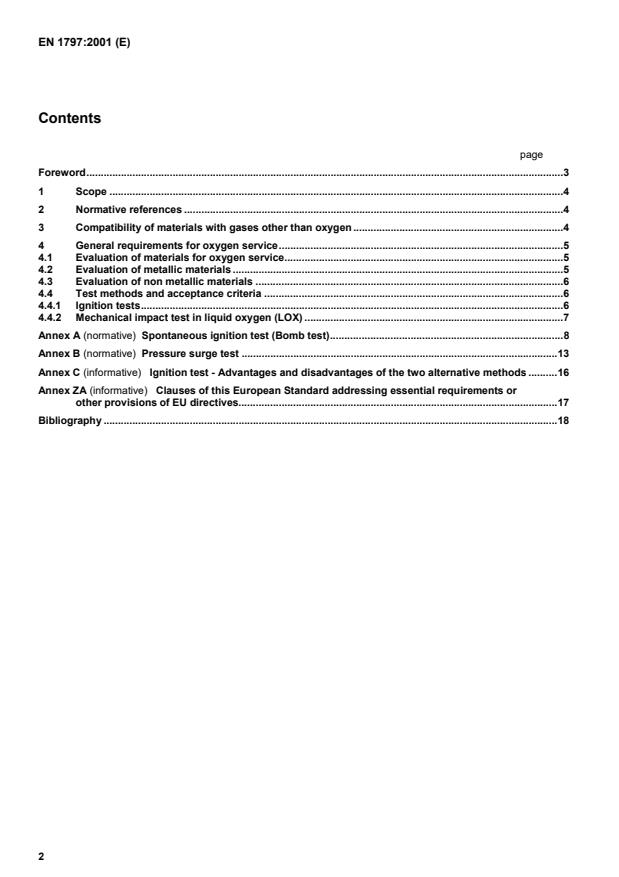
Spontaneous ignition test (Bomb test).8Annex B (normative)
Pressure surge test.13Annex C (informative)
Ignition test - Advantages and disadvantages of the two alternative methods.16Annex ZA (informative)
Clauses of this European Standard addressing essential requirements orother provisions of EU directives.17Bibliography.18
...