


EN 1735:1996
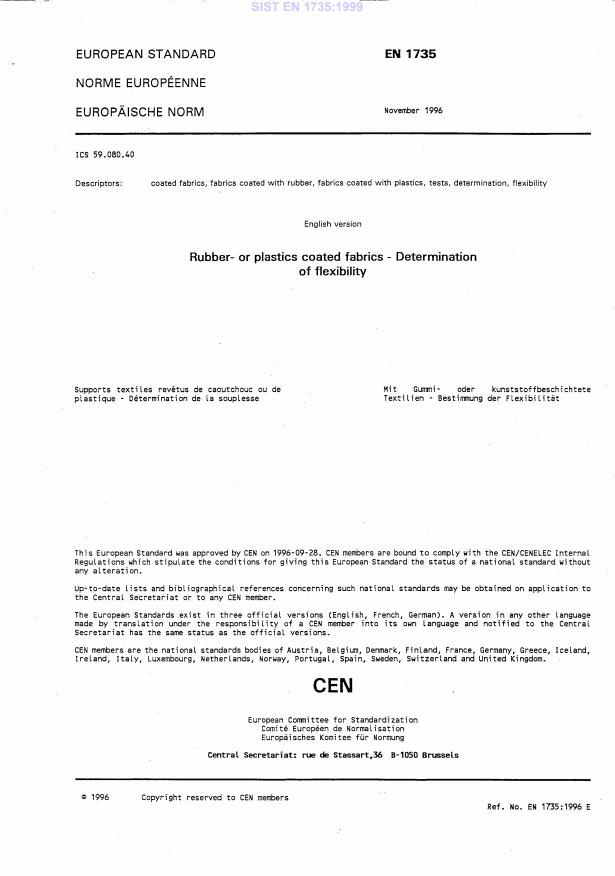
(Main)Rubber- or plastics coated fabrics - Determination of flexibility
General Information
- Abstract
This standard specifies two methods for determination of the flexibility of fabrics coated with rubber or plastics. Method 1 of this standard describes the flat loop method and method 2 the method of bending length. This standard does not apply to coated fabrics which, when they are cut in small sized pieces, tend to curl or to form a spiral, neither to those which are too rigid to form a loop.
- Status
- Published
- Publication Date
- 19-Nov-1996
- Withdrawal Date
- 30-May-1997
- Technical Committee
- CEN/TC 248 - Textiles and textile products
- Drafting Committee
- CEN/TC 248/WG 4 - Coated fabrics
- Current Stage
- 9093 - Decision to confirm - Review Enquiry
- Start Date
- 26-Jul-2024
- Completion Date
- 17-Sep-2026

Overview
EN 1735:1996 (published by CEN) specifies methods for determining the flexibility of rubber- or plastics-coated fabrics. The standard describes two test procedures - the flat loop method (Method 1) and the bending length method (Method 2) - to assess how coated textile materials behave when bent or looped. EN 1735 does not apply to coated fabrics that curl or form spirals when cut into small pieces, nor to fabrics that are too rigid to form a loop.
Key Topics
- Scope and applicability: Defines which coated fabrics are covered and explicitly excludes materials that curl/spiral when cut or cannot form loops.
- Test methods: Details two accepted procedures for flexibility assessment:
- Flat loop method (Method 1)
- Bending length method (Method 2)
- Performance evaluation: Provides a standardized way to compare flexibility results between materials and batches.
- Standardization context: European standard intended for consistent laboratory testing and quality assurance across manufacturers and laboratories.
Practical applications
EN 1735 is used to evaluate the handling, drape and serviceability of rubber-coated and plastic-coated textile products. Typical practical uses include:
- Quality control in manufacturing of coated fabrics (e.g., tarpaulins, protective clothing, upholstery, technical membranes)
- Material selection for product development where flexibility affects fit, sealing, or installation
- Comparative testing for supplier qualification and incoming inspection
- Supporting specifications in procurement to ensure consistent flexibility performance
Who uses this standard
- Textile and coated fabrics manufacturers and product engineers
- Quality assurance and testing laboratories
- Procurement and specifications teams in industries using coated textiles
- Certification bodies and compliance officers verifying product conformity
Related standards
EN 1735 focuses specifically on flexibility. For a complete assessment of coated fabric performance, users typically consult other standards addressing:
- Tensile and tear strength
- Abrasion and wear resistance
- Water/air impermeability and weathering
- Fire performance or flammability (where applicable)
Keywords (for SEO)
EN 1735, rubber-coated fabrics, plastic-coated fabrics, coated fabrics flexibility, flexibility test, flat loop method, bending length method, CEN standard
EN 1735 provides a clear, repeatable approach to measure flexibility of coated textiles - an essential property for design, quality control, and material selection in many industrial and consumer applications.
Get Certified
Connect with accredited certification bodies for this standard

Control Union Certifications
Global certification for agriculture and sustainability.

Hohenstein Institut
Textile testing and certification.

Bureau Veritas Bangladesh
Bureau Veritas certification services in Bangladesh.
Sponsored listings
Frequently Asked Questions
EN 1735:1996 is a standard published by the European Committee for Standardization (CEN). Its full title is "Rubber- or plastics coated fabrics - Determination of flexibility". This standard covers: This standard specifies two methods for determination of the flexibility of fabrics coated with rubber or plastics. Method 1 of this standard describes the flat loop method and method 2 the method of bending length. This standard does not apply to coated fabrics which, when they are cut in small sized pieces, tend to curl or to form a spiral, neither to those which are too rigid to form a loop.
This standard specifies two methods for determination of the flexibility of fabrics coated with rubber or plastics. Method 1 of this standard describes the flat loop method and method 2 the method of bending length. This standard does not apply to coated fabrics which, when they are cut in small sized pieces, tend to curl or to form a spiral, neither to those which are too rigid to form a loop.
EN 1735:1996 is classified under the following ICS (International Classification for Standards) categories: 59.080.40 - Coated fabrics. The ICS classification helps identify the subject area and facilitates finding related standards.
EN 1735:1996 is available in PDF format for immediate download after purchase. The document can be added to your cart and obtained through the secure checkout process. Digital delivery ensures instant access to the complete standard document.
Standards Content (Sample)
2003-01.Slovenski inštitut za standardizacijo. Razmnoževanje celote ali delov tega standarda ni dovoljeno.Gumirane in plastificirane tekstilije - Ugotavljanje upogibljivostiMit Gummi- oder kunststoffbeschichtete Textilien - Bestimmung der FlexibilitätSupports textiles revetus de caoutchouc ou de plastique - Détermination de la souplesseRubber- or plastics coated fabrics - Determi
...