

October 2026: New Standards Advance Railway Engineering for Friction Management and Metro Visibility
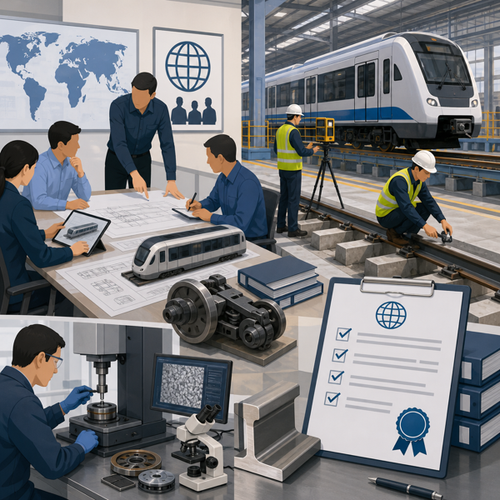
In October 2026, the railway engineering sector has seen significant developments with the publication of two pivotal international standards. These new guidelines strengthen the industry’s approach to wheel/rail interface management and safe operations within metro driver’s cab environments. Covering comprehensive background rationale and advanced visibility criteria, these documents underpin the ongoing evolution toward safer, more reliable, and efficient railway systems. Professionals involved in maintenance, operations, procurement, and system design will find critical value in understanding and implementing these standards.
Overview
Railway engineering is a domain that intersects safety, reliability, and technological innovation. Standards play a vital role by establishing universally accepted requirements for critical functions such as friction management and human factors design. This update highlights:
- The rationale and technical guidance underlying wheel/rail friction control strategies
- The criteria for external visibility from metro vehicle driver’s cabs to ensure operational safety
This article explores the scope, key requirements, technical insights, and practical implications of two recently published standards. Readers will gain actionable knowledge to ensure compliance and leverage these advancements for organizational benefit.
Detailed Standards Coverage
CEN/TR 15427-3:2026 - Rationale for Wheel/Rail Friction Management
Railway Applications – Wheel/Rail Friction Management – Part 3: Rationale for Requirements and Further Background Information
This technical report provides the foundation, background, and rationale for the requirements in the EN 15427 series and associated CEN/TS 15427 technical specifications. It serves as a comprehensive reference for practitioners and stakeholders seeking to understand the science and engineering behind effective wheel/rail friction management.
Scope and Applications:
CEN/TR 15427-3:2026 is intended for engineers, maintenance planners, suppliers, and system operators involved in specifying, deploying, or maintaining wheel/rail interface solutions. Its guidance is particularly valuable for:
- Those unfamiliar with friction management principles
- Specialists responsible for selecting materials or equipment
- Operators optimizing maintenance regimes and safety
Key Requirements and Guidance:
- Fundamental Principles: Introduces the wheel/rail interface physics, highlighting critical issues such as adhesion, noise, wear, rolling contact fatigue, and corrugation.
- Friction Management Materials: Explains the role of flange lubricants, top of rail (TOR) materials, and adhesion enhancers—each designed to modulate the coefficient of friction for optimal performance.
- Flange lubricants: Applied to wheel flanges and rail gauge faces to minimize wear and noise.
- Top of rail materials: Aim for a controlled coefficient of friction (typically 0.2–0.4) to balance traction, braking, and minimize noise/corrugation.
- Adhesion materials: Such as sand or traction gels, are critical in restoring safe traction in low-adhesion conditions (e.g., leaf fall, moisture).
- Technological Approaches: Overview of trackside vs. trainborne application systems, with guidance on equipment selection, operational factors, and maintenance.
- Testing and Validation: Defines laboratory and field testing protocols for solution validation and ongoing performance monitoring.
- Environmental and Safety Considerations: Addresses the importance of preventing environmental contamination and safe handling of friction management materials.
Notable Enhancements:
- Clear rationale behind specification clauses in the EN 15427 series
- Detailed case studies on wear, noise, and traction improvement
- Maintenance and operational strategies for both localized and network-wide applications
Key highlights:
- Clarifies the science underpinning wheel/rail interface behaviors
- Offers practical strategies for selecting and maintaining friction management systems
- Provides reference data and case studies to justify specification and operational decisions
Access the full standard:View CEN/TR 15427-3:2026 on iTeh Standards
EN 16186-9:2026 - External Visibility for Metro Vehicles
Railway Applications – Driver’s Cab – Part 9: External Visibility for Metro Vehicles
EN 16186-9:2026 establishes the performance requirements and assessment methodologies for external visibility from metro vehicle driver’s cabs. The standard applies to metro vehicles (with or without permanent drivers), excluding short-distance shuttles, and builds upon foundational anthropometric data to ensure ergonomic, safe, and efficient cab environments.
Scope and Applications:
This standard is applicable to rolling stock designers, equipment manufacturers, metro operators, safety managers, and all stakeholders tasked with specifying or approving driver’s cab layouts and equipment in urban railway systems.
Key Requirements and Specifications:
- Forward Visibility: Mandates visibility parameters from the primary driving position, including seated and standing positions. Ensures optimal sightlines for observing track, signals, and critical infrastructure.
- Anthropometric Foundations: Defines minimum and maximum body size measures to accommodate driver diversity, ensuring ergonomic access to visual information.
- Assessment Methods: Introduces procedures for measuring and evaluating forward, lateral, and rearward visibility, ensuring compliance.
- Windscreen Specifications: Requirements for size, placement, cleaning, glare protection, de-icing, and anti-reflective measures.
- Vehicle Definitions and Limits: Applies to metro vehicles as per EN 17343, with cross-references for special cases (EN 14033-4 and EN 15746-4).
Notable Changes and Innovations:
- Updated to reflect the latest human factors research and vehicle design practices
- Aligned with broader EN 16186 series for consistency across vehicle categories
Key highlights:
- Sets a new international benchmark for driver cab visibility in metro vehicles
- Incorporates rigorous, anthropometrics-based requirements
- Enhances operational safety and reliability by reducing the risk of missed signals or obstacles
Access the full standard:View EN 16186-9:2026 on iTeh Standards
Industry Impact & Compliance
Implementing these new standards will impact businesses and public authorities across the railway sector in several key ways:
- Enhanced Safety and Reliability: Both documents contribute directly to safer vehicle operations—CEN/TR 15427-3:2026 through robust friction management (improving traction, braking, and noise control) and EN 16186-9:2026 via improved driver visibility, reducing risks of incidents.
- Operational Efficiency: Optimized friction management and superior cab design support efficient energy use, reduced wear and tear, and better maintenance planning.
- Procurement and Supply Chain: Standardization of requirements simplifies procurement, contracts, and supplier specifications, supporting interoperability.
- Compliance and Deadlines: Organizations should assess their current procedures and equipment against the new requirements, update specifications, and ensure ongoing staff training. Timelines for compliance will depend on national adoption and internal project stages.
Benefits of adopting these standards:
- Assurance that operations meet current international safety benchmarks
- Future-proofing investments in vehicles and infrastructure
- Readier access to global supply chains and best practices
- Stronger justification for capital and maintenance expenditures
Risks of non-compliance:
- Legal and regulatory penalties
- Increased incidence of costly service disruptions, accidents, or equipment failure
- Reputational damage and loss of market standing
Technical Insights
Common Technical Requirements
Both standards emphasize:
- Detailed technical and ergonomic analysis (human factors and interface physics)
- Thorough procedures for testing, validation, and ongoing evaluation
- The need for robust maintenance and continuous improvement regimes
Implementation Best Practices:
- Gap Analysis: Compare existing systems and practices with new standard requirements
- Stakeholder Engagement: Involve maintenance, operations, and safety teams from the outset
- Training: Update training to reflect new friction management practices and cab assessment methods
- Testing and Certification: Leverage laboratory and field testing protocols as per CEN/TR 15427-3:2026 and EN 16186-9:2026
- Monitoring: Implement regular audits and monitoring to ensure long-term compliance and identify improvement opportunities
Testing and Certification
- Friction Management: Use both lab and field assessments to validate lubrication, top of rail, and adhesion solutions. Consider network-specific conditions and operational needs.
- Cab Visibility: Perform ergonomic mock-ups and sightline analyses during vehicle design and retrofits. Periodically reassess against actual in-service conditions.
Conclusion & Next Steps
The October 2026 publication of CEN/TR 15427-3:2026 and EN 16186-9:2026 represents a substantial advance in railway engineering best practice. By understanding and implementing these standards, organizations ensure safer workforce conditions, higher system reliability, and a competitive edge in international railway operations.
Recommendations:
- Download and review the full standards via iTeh Standards
- Conduct internal reviews and align operational practices swiftly
- Stay engaged with industry updates to prepare for future revisions and innovations
For comprehensive documentation, technical support, and ongoing updates, visit iTeh Standards.
Categories
- Latest News
- New Arrivals
- Generalities
- Services and Management
- Natural Sciences
- Health Care
- Environment
- Metrology and Measurement
- Testing
- Mechanical Systems
- Fluid Systems
- Manufacturing
- Energy and Heat
- Electrical Engineering
- Electronics
- Telecommunications
- Information Technology
- Image Technology
- Precision Mechanics
- Road Vehicles
- Railway Engineering
- Shipbuilding
- Aircraft and Space
- Materials Handling
- Packaging
- Textile and Leather
- Clothing
- Agriculture
- Food technology
- Chemical Technology
- Mining and Minerals
- Petroleum
- Metallurgy
- Wood technology
- Glass and Ceramics
- Rubber and Plastics
- Paper Technology
- Paint Industries
- Construction
- Civil Engineering
- Military Engineering
- Entertainment