

October 2026: New ISO Standard Enhances Piping Rehabilitation with Thermoset Composites
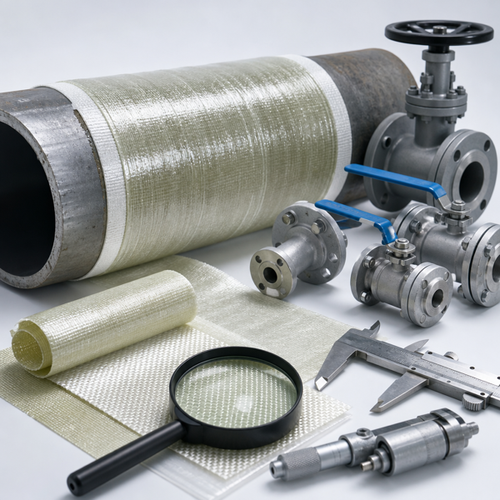
The field of fluid systems and piping technology witnesses significant advancement this October 2026 with the release of a pivotal ISO standard. The newly published ISO 11300-2:2026 introduces detailed requirements and test methods for the use of thermoset composite materials in the rehabilitation of underground drains, sewers, and water supply networks. This update marks an important leap for infrastructure reliability and quality, providing stakeholders—engineers, quality managers, compliance officers, and procurement specialists—with the clarity and assurance needed for modern pipeline rehabilitation projects.
Overview / Introduction
Fluid systems and general piping components are at the backbone of critical infrastructure worldwide. These systems not only support public sanitation and drinking water supply but also ensure environmental safety and operational resilience. As these networks age, rehabilitation and modernization are paramount. International standards like those from ISO establish the technical, safety, and quality benchmarks that drive industry-wide best practices. This article dives deep into the latest standard—ISO 11300-2:2026—to provide actionable insights on its scope, requirements, and practical impacts.
Detailed Standards Coverage
ISO 11300-2:2026 - Thermoset Composite Materials for Piping Rehabilitation
Piping systems for rehabilitation of underground drains, sewers and water supply networks — Part 2: Thermoset composite materials
Scope and Applicability
ISO 11300-2:2026 specifies comprehensive performance requirements and testing methods for pipes and fittings that utilize thermoset composite materials in the renovation of underground non-pressure and pressure pipes. The focus is on the “lining with cured-in-place pipes (CIPP)” technique—a trenchless method where a resin-saturated liner is inserted and cured within the existing pipe, effectively creating a new pipe within the old one. This standard covers both gravity (non-pressure) and pressure pipelines that supply water for human consumption, including raw intake lines.
The standard excludes:
- Lining with discrete pipes or with glass-reinforced thermosetting plastics (GRP), as those are addressed elsewhere (e.g., ISO 11295)
- Patch repairs for localized defects
Key Technical Requirements
- Material Composition:
- Lining tubes must incorporate a resin system, carrier material, and external membrane; optional reinforcement and internal membranes may be used.
- Acceptable resins include unsaturated polyester (UP), vinyl ester (VE), epoxy (EP), and vinyl ester urethane (VEU) types, each with specified properties.
- Reinforcement may involve advanced fibers (glass, carbon, aramid), declared by type and proportion.
- Mechanical and Geometric Standards:
- Wall thickness and composite structure to be declared, measured, and verified at both the manufacturing (‘M’ stage) and installed (‘I’ stage) conditions.
- Minimum thickness and composite design must ensure adequate structural integrity in both non-pressure and pressure environments.
- Flexural modulus, ring stiffness, and long-term performance (creep, corrosion, chemical resistance) are explicitly tested and reported.
- Product Marking and Traceability:
- Lining tubes and associated fittings must be durably marked with key information—standard reference, material type, wall thickness, pressure rating, manufacturer identity, and traceability data.
- Installation and Inspection:
- The standard mandates thorough installation practices, including pre-installation cleaning, using qualified personnel, and testing for leak tightness and mechanical performance post-installation.
- Provisions ensure environmental protection and safe handling of materials during storage, transport, and installation.
- Compliance for Drinking Water Pipes:
- All materials in contact with potable water must meet safety standards to prevent deterioration of water quality.
Notable Changes from Previous Editions
- Technical Consolidation: Replaces and updates content from several previous ISO standards (including ISO 11296, ISO 11297, ISO 11298 series), with revised definitions, expanded material classifications, and systematic updates for resin and membrane types.
- Enhanced Testing: Test methods for flexural properties, ring stiffness, and pressure performance have been revised for better accuracy, with long-term performance benchmarks at 50 years.
- Improved Sampling and Installation Protocols: Clearer procedures for off-cut sample collection, quality control, and documentation are established.
Key highlights:
- In-depth specifications for CIPP lining systems using thermoset composites
- Explicit test methods for mechanical, geometric, and chemical resistance properties
- Clear criteria for marking, traceability, and materials in contact with drinking water
Access the full standard:View ISO 11300-2:2026 on iTeh Standards
Industry Impact & Compliance
How The Standard Affects Your Organization
Adopting ISO 11300-2:2026 has direct, positive implications for organizations involved in pipeline rehabilitation, utility operation, water company contracting, and manufacturing of CIPP lining products. It provides a harmonized framework for:
- Design Reliability: Ensuring all materials and installed products perform under demanding stress, chemical exposure, and mechanical loads across several decades.
- Regulatory and Customer Confidence: Demonstrating alignment with ISO standards builds trust with regulatory authorities, municipal clients, and end users.
- International Market Access: Harmonization with related European (CEN) standards facilitates cross-border trade and project qualification.
- Risk Mitigation: Stronger requirements mean reduced liability for failures, leaks, or water quality incidents.
- Traceable Quality and Lifecycle Management: Stringent marking and documentation requirements promote transparency, ease of audit, and lifecycle tracking for critical infrastructure.
Timelines and Transition
The standard was officially published on October 7, 2026. Organizations are strongly advised to begin aligning specifications, procurement policies, and installer training immediately, especially for projects planned in 2027 and beyond. Transition periods may vary depending on national implementation and regulatory guidance.
Risks of Non-Compliance
- Inability to win contracts in regions requiring ISO conformity
- Greater risk of premature pipe failure and costly repairs
- Potential for adverse health and safety events, especially in potable water applications
- Regulatory penalties and reputational impacts
Technical Insights
Common Technical Requirements Across the Standard
- CIPP System Construction: Multi-layered liners with well-defined membrane, composite, and structural layers to ensure both immediate and long-term pipe performance.
- Mechanical Testing: Every liner product must pass ring stiffness, flexural modulus, tensile strength, and pressure tests at both installation and during service life projections (up to 50 years).
- Corrosion and Chemical Resistance: Resistance to acids and chemicals present in typical sewer and drainage environments is mandatory.
- Drinking Water Compliance: All components used for potable water networks must prevent contamination and preserve water quality through the entire lifecycle.
Implementation Best Practices
- Detailed Pre-installation Evaluation: Assess host pipe conditions, diameter, and defects to select appropriate liner dimensions and material systems.
- Thorough Documentation: Maintain comprehensive records—installation manuals, sampling results, quality assurance data—to support compliance and facilitate future audits.
- Installer Training: Require that all field personnel are trained and certified in CIPP installation consistent with the processes designated in manufacturer and standard guidance.
- Collaborate with Suppliers: Work closely with system and material suppliers to confirm declared values for all liner properties and request certificates for compliance on every project.
- Long-Term Monitoring: Post-installation testing for leak tightness and continual observation for performance should be incorporated into maintenance plans.
Testing and Certification
- Type Testing: Required for every new liner design or material combination; must include long-term creep and flexural assessments.
- Sampling: Employ simulated installations or controlled off-cuts; adhere to the standard’s guidance for sample orientation and preparation.
- Third-Party Certification: For projects in regulated environments, pursue independent inspection or product certification to demonstrate conformity.
Conclusion / Next Steps
The October 2026 release of ISO 11300-2:2026 sets a new global standard for the rehabilitation of underground piping systems using thermoset composite materials and cured-in-place pipe (CIPP) techniques. By establishing robust material, mechanical, and quality assurance requirements, it empowers utility owners, engineers, and contractors to deliver safer, longer-lasting, and more reliable infrastructure.
Key takeaways:
- ISO 11300-2:2026 is essential for anyone designing, specifying, installing, or certifying CIPP-based rehabilitation works
- It provides harmonized global guidelines for material selection, product marking, testing, and quality control
- Early adoption ensures access to projects, reduces risk, and meets both client and regulatory expectations
Recommendations:
- Review your current specifications and update them in line with the new standard
- Engage with system and material suppliers to confirm compliance
- Organize training and certification for project managers and installation crews
- Monitor regulatory announcements for national or regional adoption requirements
Stay ahead and ensure your projects are future-proofed—explore the full ISO 11300-2:2026 standard today.
Access the full standard for your projects and compliance needs:View ISO 11300-2:2026 on iTeh Standards
Categories
- Latest News
- New Arrivals
- Generalities
- Services and Management
- Natural Sciences
- Health Care
- Environment
- Metrology and Measurement
- Testing
- Mechanical Systems
- Fluid Systems
- Manufacturing
- Energy and Heat
- Electrical Engineering
- Electronics
- Telecommunications
- Information Technology
- Image Technology
- Precision Mechanics
- Road Vehicles
- Railway Engineering
- Shipbuilding
- Aircraft and Space
- Materials Handling
- Packaging
- Textile and Leather
- Clothing
- Agriculture
- Food technology
- Chemical Technology
- Mining and Minerals
- Petroleum
- Metallurgy
- Wood technology
- Glass and Ceramics
- Rubber and Plastics
- Paper Technology
- Paint Industries
- Construction
- Civil Engineering
- Military Engineering
- Entertainment