


A Practical Guide to Water Quality Standards for Chemical Substance Examination
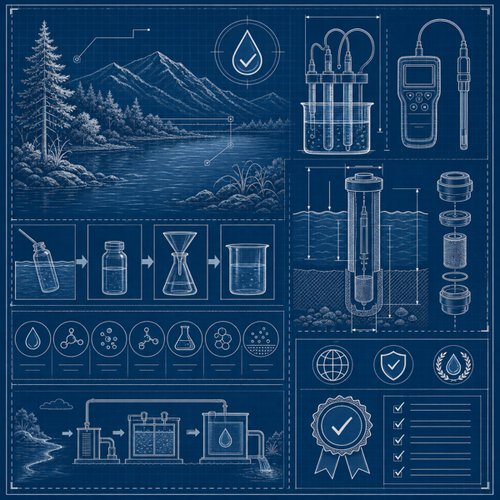
Clean water is the cornerstone of environmental health and a foundation for industries, municipalities, and societies around the world. Today, advances in analytical chemistry, environmental technology, and public policy increasingly hinge on rigorous international standards for the examination of water for chemical substances. These standards define the methodologies and protocols for precise detection, quantification, and monitoring of a variety of potentially harmful compounds, ensuring that water remains safe for use and discharge. This guide covers four pivotal standards from the ISO suite, each providing a framework for water quality analysis that is essential for both regulatory compliance and operational efficiency.
Whether you are a plant manager, environmental scientist, regulatory officer, or simply concerned about the water you consume, understanding these standards is critical. Each standard not only addresses technical requirements but also plays a strategic role for businesses implementing new technologies – from reducing risk of pollution to optimizing throughput and maintaining competitive advantage on a global scale.
Overview / Introduction
Water is a vital resource, intimately linked to health, ecosystems, and economic activity. The rapid assimilation of industrial processes, population growth, and evolving pollution risks mean that the quality of water can no longer be taken for granted. Standards for the examination of water for chemical substances ensure a harmonized approach to water testing, pollutant identification, and environmental monitoring.
In this article, you will discover:
- The importance of international water quality standards
- The scope, applications, and practical implementation of four key standards
- How these standards improve accuracy, security, and scalability for businesses and the public
- Strategies to comply with, and benefit from, these specifications in real-world scenarios
Detailed Standards Coverage
ISO 18127:2026 - Determination of Adsorbable Organically Bound Halogens in Water
Water quality — Determination of adsorbable organically bound fluorine, chlorine, bromine and iodine (AOF, AOCl, AOBr, AOI) — Method using combustion and subsequent ion chromatographic measurement
ISO 18127:2026 sets out an in-depth method for quantifying organically bound halogens – specifically fluorine, chlorine, bromine, and iodine – that can be adsorbed onto activated carbon from water samples. Using combustion followed by ion chromatographic analysis, this standard offers a sensitive and reliable approach for analyzing a wide range of water sources including groundwater, surface water, bank filtrate, drinking water, aqueous eluates, cooling water, and wastewater.
The process involves:
- Adsorption of organic halogens on activated carbon columns
- Combustion of these columns to convert compounds to halide ions
- Quantification of individual halide ions via ion chromatography
- Flexible detection for dissolved and particulate-bound fractions using optional filtration steps
ISO 18127 recognizes the challenges posed by varying concentrations and complex matrices (such as samples with high suspended solids or inorganic halides) and supplies alternative sample handling methodologies, including shaking and solid-phase extraction protocols. It further presents performance data from international interlaboratory trials, ensuring reliability and repeatability across global labs.
Who needs to comply?
- Municipal and industrial water testing laboratories
- Environmental monitoring agencies
- Wastewater treatment plants
- Organizations engaged in environmental compliance and risk assessment
Practical implications: Compliance helps organizations detect persistent organic pollutants, monitor water quality against regulatory benchmarks, and optimize water treatment processes. It is particularly pertinent when new technologies—such as advanced filtration or industrial production changes—may alter effluent profiles.
Key highlights:
- Simultaneous detection of four key halogens (F, Cl, Br, I)
- Applicability to both dissolved and suspended fractions of water samples
- Can be extended to lower detection limits with optimized materials
Access the full standard:View ISO 18127:2026 on iTeh Standards
ISO 18191:2026 - Determination of pHT in Seawater
Water quality — Determination of pHT in seawater — Method using the indicator dye m-cresol purple
ISO 18191:2026 provides a high-precision, spectrophotometric method for determining the pHT (total hydrogen ion concentration pH) of seawater using the dye m-cresol purple. Applicable across oceanic pH values from 7.4 to 8.2 and for a practical salinity range of 20 to 40, this standard is vital for ocean acidification monitoring, marine research, and industries involved with seawater processing.
The method comprises:
- Careful sampling to avoid contamination and air exchange
- Addition of purified m-cresol purple as an indicator
- Measurement of absorbances at specific wavelengths to determine pHT
- Correction for baseline shifts and indicator-induced alterations
Particular emphasis is placed on factors affecting measurement reliability, including instrument calibration, temperature control, and storage considerations. With its repeatability below 0.003 pH units, the method is suitable for programs requiring both accuracy and harmonization across different laboratories, making it invaluable for global marine data initiatives and environmental impact assessments.
Who needs to comply?
- Oceanographic institutes and research vessels
- Environmental monitoring agencies
- Industrial operators using or discharging seawater (e.g., desalination plants)
Practical implications: Meeting this standard ensures repeatable and accurate pH monitoring crucial for regulatory compliance — especially important for businesses implementing carbon capture or marine discharge technologies.
Key highlights:
- Repeatable, robust method for seawater pHT
- Applicable to international observation programs and regulatory reporting
- In-depth guidance on sampling and error minimization
Access the full standard:View ISO 18191:2026 on iTeh Standards
ISO 22032:2026 - Determination of Polybrominated Diphenyl Ethers (PBDEs) in Sediment, Suspended Particulate Matter, and Biota
Water quality — Determination of polybrominated diphenyl ethers (PBDE) in sediment, suspended particulate matter and biota — Method using gas chromatography coupled with tandem mass spectrometry (GC-MS/MS) or with high resolution mass spectrometry (GC-HRMS)
ISO 22032:2026 gives a clear, validated method for detecting and quantifying polybrominated diphenyl ethers (PBDEs), a class of persistent and hazardous flame retardants, within sediments, suspended particulate matter, and biological samples. Employing either gas chromatography coupled to tandem mass spectrometry (GC-MS/MS) or high-resolution mass spectrometry (GC-HRMS), the standard covers a range of PBDE congeners relevant for regulatory frameworks, including those cited in EU Directives and global chemical conventions.
Key method steps include:
- Extraction of PBDEs from dried matrix (sediment, particulates, or biota)
- Rigorous clean-up using manual or automated techniques to remove interfering substances
- Highly sensitive instrumental analysis to enable regulatory limits-of-detection
The standard addresses matrix-specific challenges—such as interference from other persistent organic pollutants—and offers enhanced protocols for more sensitive detection where required (e.g., via selective clean-up strategies). It also stipulates the use of 13C-labeled internal standards to ensure quantification accuracy.
Who needs to comply?
- Environmental testing laboratories
- Regulatory authorities and water quality monitoring agencies
- Industrial sites subject to pollutant release regulations (e.g., electronics, plastics, and textiles)
Practical implications: Implementing ISO 22032 supports compliance with discharge regulations, pollution tracking, and risk assessment of contaminated sites. It also supports sustainable certification schemes and green procurement for businesses.
Key highlights:
- Detection of PBDEs at extremely low concentrations (down to 0.0002 μg/kg in biota)
- Suitable for complex matrices, including biota and sediments
- Modular clean-up and detection options tailored to analyte and matrix
Access the full standard:View ISO 22032:2026 on iTeh Standards
ISO/TS 21738:2026 - Active Biomonitoring with In Situ Caged Benthic Amphipods
Water quality — Active biomonitoring method with in situ caged benthic amphipods
ISO/TS 21738:2026 introduces an innovative active biomonitoring technique, in which benthic amphipods (small crustaceans) are caged and exposed in situ at monitoring stations. The approach allows direct measurement of chemical substance bioaccumulation (metals, organics, or both) within organisms, providing a powerful, integrative picture of environmental quality and pollutant bioavailability over time.
Main elements of the protocol include:
- Selection and conditioning of test organisms (homogeneous adult males)
- Use of secure, perforated cages designed to maximize water exchange and minimize escape or injury
- Deployment to field sites, followed by exposure for a defined period
- Retrieval, sorting, and laboratory conditioning of surviving organisms before chemical analysis
Besides facilitating comprehensive upstream/downstream or multi-site impact studies, this standard helps standardize biomonitoring responses and reduce confounding biological variability by using a controlled set of organisms.
Who needs to comply?
- Environmental monitoring agencies
- Water utility companies
- Regulatory bodies and consultants conducting ecological assessments
Practical implications: Adopting this biomonitoring method advances the detection of bioaccumulative toxins, supports ecological risk assessments, and strengthens compliance with environmental quality objectives—especially when implementing novel remediation or pollution-abatement technologies.
Key highlights:
- Active biomonitoring for cumulative and time-integrated assessment
- Harmonized guidance for organism selection, handling, and exposure
- Supports comprehensive risk evaluation and impact analysis
Access the full standard:View ISO/TS 21738:2026 on iTeh Standards
Industry Impact & Compliance
The adoption of these standards transforms the way organizations approach environmental compliance, pollution control, and water resource management. By implementing internationally recognized water quality standards, businesses can not only meet local and international legal requirements but also demonstrate environmental stewardship to stakeholders and regulatory bodies.
Benefits for businesses include:
- Increased productivity and efficiency through standardized processes
- Enhanced security and safety by proactively identifying and mitigating contaminants
- Scalable, cost-effective compliance as operations expand or new technologies are introduced
- Improved market reputation and eligibility for sustainable certification schemes
- Reduced risks of legal or regulatory penalties, environmental damage, and brand loss
Conversely, non-compliance may result not just in fines but in operational downtime, loss of certification, and increased scrutiny from customers and regulators. These standards enable data-driven decision-making and future-proof organizations in an era of rapid technological and regulatory change.
Implementation Guidance
Implementing these water quality examination standards involves:
Assessment and Planning:
- Determine which standards are most relevant based on water sources, discharge profiles, and regulatory requirements.
- Evaluate laboratory capabilities and identify gaps in equipment, staff skills, and procedures.
Training and Resourcing:
- Invest in training laboratory and field staff on sampling, sample preparation, and analytical protocols.
- Upgrade or calibrate instrumentation to align with specification requirements (e.g., ion chromatography, mass spectrometry).
Process Optimization:
- Integrate protocols for quality control, blanks, calibration, and validation as outlined in each standard.
- Establish data management and reporting processes to demonstrate compliance and support audits.
Continuous Improvement:
- Participate in interlaboratory comparisons or proficiency testing for ongoing verification of analytical accuracy.
- Stay informed about standard updates or best practice revisions (new editions, technical specifications, etc.).
Leverage Support Resources:
- Access guidance documents, training workshops, and expert consultancy via iTeh Standards and national standards bodies.
- Utilize reference materials and automation options to ensure consistency and reproducibility.
Best practices:
- Always use blanks and internal standards to validate measurements
- Document all procedures and deviations for traceability
- Regularly maintain and calibrate analytical equipment
- Engage with external proficiency testing schemes
Conclusion / Next Steps
Water quality has never been more important for industries, governments, and communities worldwide. As technologies evolve and regulatory expectations rise, these four international standards provide an essential foundation to support accurate, reliable, and comprehensive analysis of chemical substances in water.
Key takeaways:
- Adopting robust water examination standards safeguards public health, the environment, and business viability
- Each standard offers actionable, harmonized methods to meet compliance and operational goals
- Scalable and secure implementation positions organizations for long-term success in a fast-changing regulatory landscape
Recommendations:
- Review which of the four standards apply to your operations or responsibilities
- Invest in ongoing training, instrumentation, and quality assurance as outlined in each publication
- Explore iTeh Standards for the latest documents, implementation resources, and expert support
Take the next step to elevate your water quality management: access the detailed standards and improve your organization's environmental performance, compliance, and reputation.
Categories
- Latest News
- New Arrivals
- Generalities
- Services and Management
- Natural Sciences
- Health Care
- Environment
- Metrology and Measurement
- Testing
- Mechanical Systems
- Fluid Systems
- Manufacturing
- Energy and Heat
- Electrical Engineering
- Electronics
- Telecommunications
- Information Technology
- Image Technology
- Precision Mechanics
- Road Vehicles
- Railway Engineering
- Shipbuilding
- Aircraft and Space
- Materials Handling
- Packaging
- Textile and Leather
- Clothing
- Agriculture
- Food technology
- Chemical Technology
- Mining and Minerals
- Petroleum
- Metallurgy
- Wood technology
- Glass and Ceramics
- Rubber and Plastics
- Paper Technology
- Paint Industries
- Construction
- Civil Engineering
- Military Engineering
- Entertainment