


August 2026: New Environmental Safety Standards for Ships, Tumble Dryers, and Food Waste Disposers
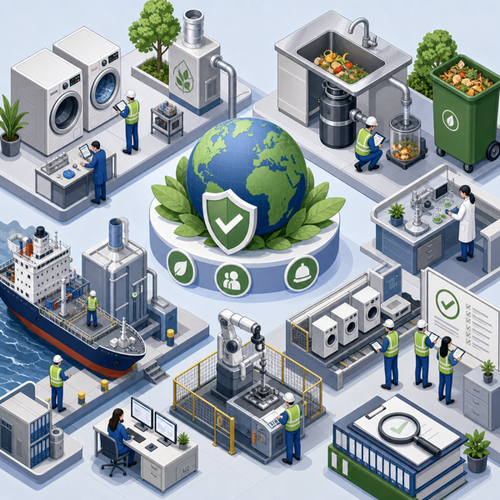
Compliance and safety requirements are advancing quickly across Environmental Protection, Health, and Safety sectors. The August 2026 publication of three new international standards marks significant steps forward for marine operations, consumer appliances, and facility safety worldwide. Covering innovative ballast water management for ships, fire protection in tumble dryers, and updated requirements for food waste disposers, these standards are set to re-shape risk management and compliance for quality managers, engineers, regulatory teams, and procurement specialists in key industries. This article delivers an in-depth review of each new specification, their practical impact, and actionable pathways toward full compliance.
Overview
Environmental Protection, Health, and Safety standards are foundational to operational sustainability and risk reduction in today’s global industries. They harmonize safety processes, ensure environmental responsibility, and protect consumers and workers alike. As environmental regulations become more rigorous—and as new risks emerge with evolving technology—the importance of robust, actionable standards continues to grow.
In this article—Part 3 of our August 2026 series—we spotlight three essential new standards:
- Procedures for commissioning of electrolytic ballast water management systems for ships (ISO 23817)
- Fire safety evaluation for electric tumble dryers (CLC IEC/TS 63576)
- Enhanced appliance safety for food waste disposers (IEC 60335-2-16)
Read on for a technical and practical breakdown, plus essential compliance guidance for professionals.
Detailed Standards Coverage
ISO 23817:2026 - Ships and Marine Technology — Ballast Water Management Systems (BWMS) — Commissioning and Testing with Electrolytic Methods
Ships and marine technology — Ballast water management systems (BWMS) — Procedures for commissioning and testing BWMS using electrolytic methods
ISO 23817:2026 equips shipowners, marine engineers, and inspectors with concrete procedures and safety requirements for commissioning ballast water management systems (BWMS) using electrolytic methods. This standard arises from heightened regulatory focus on invasive aquatic species transported via ballast water. It provides a rigorous, practical framework to verify that systems meet the International Maritime Organization (IMO) Ballast Water Management Convention (BWM Convention, Regulation D-2), as well as port state controls.
Scope and Key Requirements:
- Step-by-step processes for installation inspection, function tests, alarm/bypass/emergency shutdown validation, and all key operational checks post-installation.
- Guidance for ship crew training, installation documentation, and structured checklists for critical tasks, ensuring personnel safety at each stage.
- Extended procedures for sampling and biological analysis of ballast water, in accordance with IMO Circular BWM.2/Circ.70/Rev.1.
- Strict record keeping for all commissioning activities, including detailed biological efficacy test reports and deficiency trackers.
- Applicability for both new installations and retrofit inspections, supporting compliance checks by Recognized Organizations (ROs) and type-approval authorities.
Marine fleet managers, shipyards, surveyors, and classification societies must comply when installing, retrofitting, or certifying BWMS with electrolytic treatment. Implementation includes documentation audits, on-board testing, and verification of sample analysis protocols.
Key highlights:
- Comprehensive installation inspection, function test, and system design limitation (SDL) testing
- Enhanced safety procedures, including mandatory crew training and PPE requirements
- Record-keeping and documentation aligned with IMO/USCG ballast water discharge standards
Access the full standard:View ISO 23817:2026 on iTeh Standards
CLC IEC/TS 63576:2026 - Evaluation Methods for Protection Against Fire Risk in Electric Tumble Dryers
Evaluation methods for protection against risk of fire in electric tumble dryers
Increasing reports of domestic appliance fires—especially those started or propagated by lint accumulation—have placed new scrutiny on tumble dryer safety. CLC IEC/TS 63576:2026 addresses these risks with robust evaluation and testing guidance. Prepared in alignment with IEC TS 63576:2025, this standard targets manufacturers, testing laboratories, certification bodies, and consumer safety regulators.
Scope and Key Requirements:
- Specifies test methods for evaluating fire risk associated with electric tumble dryers, with a focus on lint build-up inside the appliance enclosure.
- Addresses both vented and condenser-type dryers, including the use of standard and nominal exhaust ducts for accurate airflow and pressure assessment during fire risk testing.
- Mandates simulation of abnormal operation conditions, reproducible testing environments, and documentation of fire protection features.
- Provides guidance on requirements and expected performance of fire-safety-related components, enclosure materials, and alarm systems.
Manufacturers, product safety engineers, and independent test labs need to apply these evaluation procedures at design, prototype, and production phases for all domestic and similar electric tumble dryers.
Key highlights:
- Testing methods for evaluating fire risk due to lint accumulation
- Standardized test room and exhaust duct specifications
- Documentation and data requirements for traceability and regulatory review
Access the full standard:View CLC IEC/TS 63576:2026 on iTeh Standards
IEC 60335-2-16:2022 - Safety of Household and Similar Electrical Appliances – Particular Requirements for Food Waste Disposers
Household and similar electrical appliances - Safety - Part 2-16: Particular requirements for food waste disposers
The sixth edition of IEC 60335-2-16 (with its 2026 amendment) brings vital safety upgrades for household and commercial food waste disposers. Addressing hazards such as electrical shock, mechanical injury, fire, and water ingress, the revision aligns appliance safety with the latest IEC 60335-1:2020 provisions and current national regulatory expectations.
Scope and Key Requirements:
- Applies to electric (including DC and battery-operated) food waste disposers up to 250V, installed in household, light industry, and farm environments.
- Outlines strict requirements for ingress protection (minimum IPX1), safe mechanical construction, protected wiring, and robust overload/overheat protection devices that are not self-resetting.
- Sets temperature rise limits for surfaces, increased from previous editions, and adds new measurement procedures for external accessible surfaces (Clause 11).
- Covers required markings, instructions on safe use and limitations (e.g., prohibition of hard materials, mandatory water flow during operation), operator safety (inlet protection), and abnormal operation testing.
- Excludes portable, incinerator-type, and large-scale commercial units, focusing on installed disposers in consumer and light commercial installations.
Target audiences include appliance manufacturers, safety and compliance engineers, facility managers, and regulatory authorities across all regions where food waste disposers are installed or sold.
Key highlights:
- Updated electrical and mechanical safety requirements, including new abnormal operation and enclosure protection tests
- Enhanced surface temperature rise and moisture resistance criteria
- Mandatory operator safety interlocks and overload protection design
Access the full standard:View IEC 60335-2-16:2022 on iTeh Standards
Industry Impact & Compliance
The adoption of these standards is pivotal for organizations seeking to stay compliant with evolving environmental and safety regulations. For maritime operators, adherence to ISO 23817 assures compliance with IMO and port state BWM regulations, reducing the risk of detentions and costly non-compliance penalties. Appliance manufacturers that integrate CLC IEC/TS 63576 and IEC 60335-2-16 into their product development cycles will meet or exceed consumer safety legislation, enhancing trust and market acceptance.
Compliance Considerations:
- Timelines: Regulatory and certification bodies often provide a grace period (typically 12–36 months) for transition to new or revised standards.
- Certification: Third-party testing and certification are strongly advised for products and systems in regulated sectors, both for legal compliance and competitive differentiation.
- Documentation: Robust, audit-ready documentation—from installation/commissioning records to product test reports—will streamline both regulatory inspections and internal risk audits.
Benefits of Adoption:
- Demonstrates due diligence and commitment to safety and environmental stewardship
- Reduces potential for safety incidents, recalls, detentions, and reputational damage
- Supports international market access and harmonization with leading regulations (e.g., IMO BWM, EU energy appliance directives)
Risks of Non-Compliance:
- Potential for fines, sanctions, and loss of product certification/approval
- Delayed or denied market access
- Operational disruptions, remediation costs, and negative brand impact
Technical Insights
Looking across all three standards, there are shared technical themes and best practices for industry professionals:
- Risk-Based Design: All standards emphasize proactive hazard identification, testing under normal and abnormal conditions, and built-in mechanisms for injury and environmental protection.
- Commissioning and Functional Testing: Verification of installed systems is essential – whether validating a ship’s BWMS efficacy (sample analysis, SDL testing), fire risk in dryers (lint scenario simulation), or confirming appliance safety (overload, temperature, and ingress tests for food disposers).
- Training and Documentation: Training operators (crew, users, maintenance personnel) and maintaining clear, comprehensive documentation is a baseline for compliance and traceability.
- Third-Party Involvement: Many critical validation steps involve recognized, independent certification bodies or testing organizations, ensuring impartiality and global recognition.
- Continuous Improvement: Regular technical revisions and harmonization across standards series (e.g., alignment to latest IEC 60335-1 or IMO Circulars) ensure standards keep pace with technology and risk landscapes.
Conclusion / Next Steps
The August 2026 publication of these three Environmental Protection, Health, and Safety standards underscores the global push toward greater safety, environmental responsibility, and regulatory rigor. Organizations operating ships, manufacturing or selling household appliances, or overseeing facility and product compliance should:
- Evaluate current practices against the requirements and technical procedures outlined in the new standards.
- Train relevant personnel—from ship crews to QA testers and compliance managers—on the updated specifications and documentation needs.
- Engage third-party certification or testing agencies as required for installation, commissioning, and periodic inspections.
- Stay updated by subscribing to authoritative standards platforms like iTeh Standards, ensuring ongoing compliance as updates and revisions are published.
For those tasked with risk management, quality assurance, or technical procurement, proactive adoption and implementation of these August 2026 publications will drive operational excellence, boost competitive advantage, and help future-proof your organization against regulatory shifts.
Categories
- Latest News
- New Arrivals
- Generalities
- Services and Management
- Natural Sciences
- Health Care
- Environment
- Metrology and Measurement
- Testing
- Mechanical Systems
- Fluid Systems
- Manufacturing
- Energy and Heat
- Electrical Engineering
- Electronics
- Telecommunications
- Information Technology
- Image Technology
- Precision Mechanics
- Road Vehicles
- Railway Engineering
- Shipbuilding
- Aircraft and Space
- Materials Handling
- Packaging
- Textile and Leather
- Clothing
- Agriculture
- Food technology
- Chemical Technology
- Mining and Minerals
- Petroleum
- Metallurgy
- Wood technology
- Glass and Ceramics
- Rubber and Plastics
- Paper Technology
- Paint Industries
- Construction
- Civil Engineering
- Military Engineering
- Entertainment