


July 2026: Updated IEC Standard for Power Cables in Domestic, Commercial, and Entertainment Applications
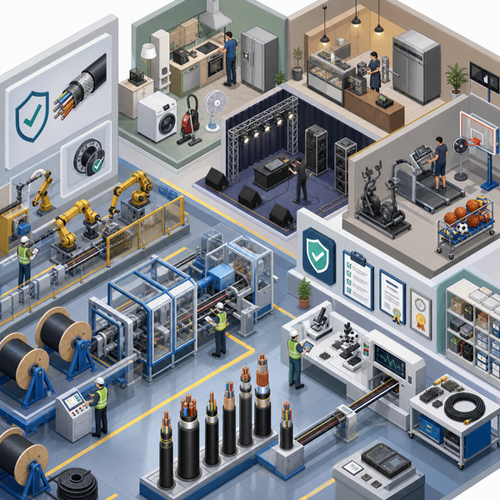
Major July 2026 Update: IEC Power Cable Standard for Domestic, Commercial, and Entertainment Sectors
In July 2026, the international landscape for electrical safety and reliability in the Domestic and Commercial Equipment, Entertainment, and Sports sectors has evolved with the publication of a revised standard: IEC 60502-2:2014. This latest edition offers comprehensive guidance for engineers, quality managers, and compliance professionals overseeing medium voltage power installations in buildings, venues, and commercial infrastructures. In this article, we break down the core changes, technical requirements, and industry impacts of this pivotal standard.
Overview / Introduction
Modern homes, commercial complexes, and entertainment venues rely on robust, efficient, and safe electrical networks. As power distribution systems become more complex and capacity demands grow, the significance of international standards like IEC 60502-2 becomes paramount. These standards set the groundwork for consistent cable construction, performance, and testing, mitigating risks and ensuring safety for end users.
IEC 60502-2:2014 specifically addresses power cables with extruded insulation for rated voltages from 6 kV to 30 kV. The latest revision brings enhanced clarity and updated technical requirements tailored to new materials, installation practices, and risk mitigation strategies. Professionals reading this article will gain:
- An understanding of the scope and application of IEC 60502-2:2014
- A breakdown of essential design and testing requirements
- Insight into compliance obligations and market impact
Detailed Standards Coverage
IEC 60502-2:2014 – Power Cables with Extruded Insulation (6 kV – 30 kV)
Power cables with extruded insulation and their accessories for rated voltages from 1 kV (Um = 1.2 kV) up to 30 kV (Um = 36 kV) - Part 2: Cables for rated voltages from 6 kV (Um = 7.2 kV) up to 30 kV (Um = 36 kV)
This standard provides the global benchmark for the design, construction, and testing of fixed installation power cables with extruded solid insulation, used within distribution networks and industrial installations—critical for powering domestic buildings, commercial centers, sports complexes, and entertainment venues. It places particular emphasis on:
- Construction and dimension requirements for cables, including conductor material and insulation types (such as XLPE, EPR, and HEPR)
- Specific test requirements for mechanical and electrical performance
- Considerations for water ingress and cable longevity
- Exclusions for special-use cables (e.g., overhead, mining, nuclear, submarine, or shipboard applications)
Key Requirements and Specifications
- Conductor Options: Copper (plain, tinned, or metal-coated), aluminum, or aluminum alloy (Classes 1 or 2 per IEC 60228), with optional longitudinal watertightness
- Insulation Types: Extruded polyvinyl chloride (PVC), cross-linked polyethylene (XLPE), ethylene propylene rubber (EPR), and hard ethylene propylene rubber (HEPR)
- Voltage Designations: Rated and maximum system voltages covering 6/10 kV to 18/30 kV
- Screening: All cables must have metallic screening, either per-core or collectively, for insulation performance and fault containment
- Protective Sheathing: Includes lead sheaths and oversheaths (PVC, PE, halogen-free), with detailed thickness calculation procedures
- Armouring: Options for flat/round wire, tape, or interlock metal tape for enhanced mechanical protection
- Testing Protocols: Comprehensive routine, sample, and type tests covering resistance, partial discharge, voltage withstand, hot set, bending, flame spread, water penetration, and more
- Water Penetration Mitigation: Cable requirements and testing for radial and longitudinal water resistance
- Fire and Smoke Safety: Prescribes requirements and tests for flame spread, smoke density, acidity, and halogen content of evolved gases
Who Needs to Comply?
- Cable manufacturers supplying medium voltage power cables to domestic, commercial, and entertainment markets
- Distribution network operators and infrastructure owners
- Facility managers responsible for building safety and electrical integrity
- Engineering consultants designing or specifying cable systems
- Compliance and safety officers overseeing regulatory and insurance obligations
Practical Implications for Implementation
- Cables must be selected and installed according to detailed conductor sizes, insulation types, and voltage classes
- System designers must account for installation conditions, environment, and expected load to calculate cable rating and select appropriate oversheathing and armour
- Rigorous acceptance and routine testing is required at manufacturing stages and after installation
- Documentation and traceability become critical for regulatory compliance, installations audit, and future maintenance
Notable Changes from Previous Editions
- Simplified calculation procedures for sheath and oversheath thickness
- New subclause for determining the cable conductor temperature
- Updated routine voltage test procedures
- Added routine electrical test on oversheath
- Revised requirements for non-metal sheaths (including semi-conductive layers)
- Amended tolerances for bending test cylinders
- Inclusion of a 0.1 Hz test post-installation
- Adoption of the updated IEC 60811 test method structure
Key highlights:
- Enhanced procedures for cable sheath and oversheath thickness
- New and clarified test methods for mechanical, thermal, and electrical properties
- Stronger focus on water ingress protection and fire safety (smoke, halogen)
Access the full standard:View IEC 60502-2:2014 on iTeh Standards
Industry Impact & Compliance
The updated IEC 60502-2:2014 standard has significant ramifications for all stakeholders in the domestic and commercial equipment, entertainment, and sports sectors:
- Enhanced Safety: More stringent test protocols and fire performance measures directly reduce the risk of electrical fires, cable failures, and associated hazards in densely populated or high-occupancy facilities.
- Improved Reliability: Tightened requirements for insulation, conductor quality, and water penetration protection lead to longer cable lifespan and reduced unplanned downtime.
- Global Consistency: Unified international requirements simplify procurement and design for multinational facilities and suppliers, aiding in regulatory harmonization and cross-border commerce.
- Compliance Obligations: Up-to-date documentation of compliance with IEC 60502-2 becomes a baseline requirement for new installations and upgrades, particularly for insurance, regulatory approvals, and audits.
- Implementation Timeline: While the standard takes effect from July 2026, organizations procuring or specifying cables should transition as soon as possible, accounting for supply chain lead times and scheduled maintenance periods.
Risks of Non-Compliance
- Increased liability in case of cable-related incidents (fire, electric shock, system failure)
- Potential insurance claim rejections or higher premiums
- Delays in building approvals or facility certifications
- Costly retrofits and replacements if non-compliant cable is discovered post-installation
Benefits of Early Adoption
- Reduced risk and total cost of ownership over the cable lifecycle
- Easier regulatory approval and certification processes
- Enhanced reputation for safety and conformity among clients, tenants, and the public
Technical Insights
Common Technical Requirements Across the Standard
- Material Quality Control: Cable insulation and sheathing compounds must meet precise mechanical, thermal, and chemical spec requirements before and after aging
- Thorough Testing Regimen:
- Routine tests: Conductor resistance, partial discharge, voltage withstand, oversheath integrity
- Sample/type tests: Mechanical and aging tests on insulation/sheathing, fire performance, dimensional checks
- Installation tests: Electrical integrity and 0.1 Hz withstand post-installation
- Calculation Tools: Correct calculation procedures for conductor sizing, sheath/oversheath thickness, armour requirements, and correction factors for ambient/installation conditions (Annexes A and B)
- Documentation: Manufacturers must provide conformance results, batch acceptance records, and traceability for every cable series
Implementation Best Practices
- Early Specification: Reference IEC 60502-2:2014 in all procurement documents and design plans
- Supplier Evaluation: Select suppliers who provide type and routine test certification to the latest edition
- Site Testing: Plan for post-installation testing (including 0.1 Hz withstand) and retain all records for future audits
- Training: Ensure installation crews and inspectors are familiar with new bending, sheath, and fire test requirements
- Documentation: Retain full cable documentation, including type test reports and compliance certificates, with facility records
Testing & Certification Considerations
- All testing should be conducted in accredited laboratories or by certified personnel with traceable equipment
- Ensure periodic audits or spot checks for compliance throughout supplier batches and on-site installations
- For export or third-party certification markets, ensure all supporting documentation includes explicit reference to IEC 60502-2:2014
Conclusion / Next Steps
IEC 60502-2:2014, as published in July 2026, represents a significant evolution in cable safety and performance for medium voltage applications across the domestic, commercial, entertainment, and sports environments. Organizations should:
- Review and update all cable procurement, installation, and inspection practices to comply with the latest edition
- Engage proactively with suppliers and contractors to ensure alignment with the new requirements
- Retain and update technical and compliance documentation to support ongoing regulatory and insurance needs
- Monitor for future revisions and stay engaged with authoritative platforms like iTeh Standards
For detailed specifications, official test methods, and compliance guidance, access the full text of the standard on iTeh Standards:
Access the full standard:View IEC 60502-2:2014 on iTeh Standards
Stay ahead of regulatory changes, ensure safety, and drive operational excellence by adopting IEC 60502-2:2014 for all relevant projects.
Categories
- Latest News
- New Arrivals
- Generalities
- Services and Management
- Natural Sciences
- Health Care
- Environment
- Metrology and Measurement
- Testing
- Mechanical Systems
- Fluid Systems
- Manufacturing
- Energy and Heat
- Electrical Engineering
- Electronics
- Telecommunications
- Information Technology
- Image Technology
- Precision Mechanics
- Road Vehicles
- Railway Engineering
- Shipbuilding
- Aircraft and Space
- Materials Handling
- Packaging
- Textile and Leather
- Clothing
- Agriculture
- Food technology
- Chemical Technology
- Mining and Minerals
- Petroleum
- Metallurgy
- Wood technology
- Glass and Ceramics
- Rubber and Plastics
- Paper Technology
- Paint Industries
- Construction
- Civil Engineering
- Military Engineering
- Entertainment