

October 2026 Standards Update: Advances in Aircraft and Space Engineering
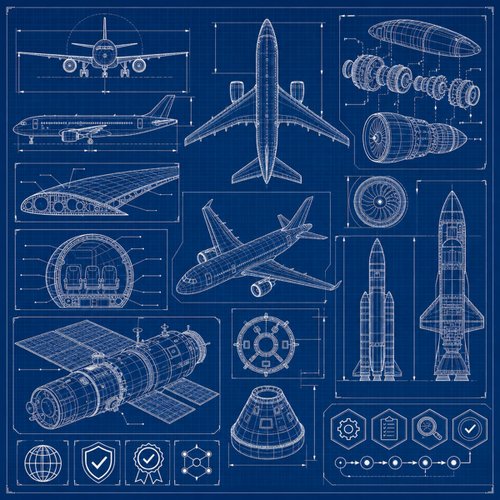
Staying ahead in the dynamic field of Aircraft and Space Vehicle Engineering requires a strong grasp of the latest standards, especially as innovation accelerates and regulatory environments evolve. In October 2026, three new international standards were published, targeting crucial areas from numerical simulation credibility to advanced aerospace hardware and comprehensive space debris mitigation. Each standard brings practical tools and measurable benefits to organizations tasked with building, qualifying, and operating the next generation of aircraft and spacecraft. This article provides an in-depth look at these standards, actionable insights for professionals, and key considerations for compliance and implementation.
Overview
Aircraft and Space Vehicle Engineering is a cutting-edge sector where precision, safety, and performance are paramount. Standards in this industry guide everything from component design to environmental protection, playing an essential role in:
- Safety assurance: Minimizing design and operational risks
- Compliance and certification: Streamlining approval for international markets
- Innovation: Enabling adoption of new technologies and materials
This article will help industry professionals understand the scope and impact of three vital standards published in October 2026, ensuring your organization is not only compliant but at the forefront of aerospace excellence.
Detailed Standards Coverage
prEN 9247 – Verification and Validation of Numerical Models and Simulations
Aerospace series – Programme management – Verification and validation of numerical models and simulations
The new prEN 9247 standard is a cornerstone document for simulation specialists, program managers, and decision-makers involved in aerospace and defense projects. It delivers a structured inventory of best practices for the verification and validation (V&V) of numerical models and simulations, ensuring the credibility of data-driven outputs and reducing reliance on costly physical tests.
Scope and Key Requirements:
- Applies to models based on physical equations in fields such as mechanics, acoustics, electromagnetism, thermal physics, fluid dynamics, multiphysics, and beyond.
- Recommends tailored V&V activities according to the simulation’s criticality, complexity, and model maturity.
- Introduces concepts like sensitivity analysis, uncertainty quantification, and credibility assessment.
- Provides guidance on simulation planning, archiving, and configuration management.
- Encourages common documentation and processes for collaborative projects, heightening confidence in simulation outputs across stakeholders.
Who needs to comply:
- Simulation teams and managers
- Aerospace manufacturers and suppliers
- Quality and compliance officers
- Organizations incorporating numerical simulation into product qualification and certification
Practical Implications:
- Streamlines development cycles and product qualification
- Reduces program costs by minimizing unnecessary physical testing
- Enhances the credibility of simulation-based decision-making
- Facilitates regulatory acceptance and future-proofing of simulation activities
Key highlights:
- Systematic framework for selecting, developing, and verifying simulation models
- Adaptable recommendations for diverse applications and organizations
- Example simulation plan templates and criticality assessment matrices
Access the full standard:View prEN 9247 on iTeh Standards
FprEN 3004 – Aerospace Self-Locking Nuts, MJ Threads, Heat Resisting Steel FE-PA2601 (A286)
Aerospace series – Nuts, self-locking, MJ threads, in heat resisting steel FE-PA2601 (A286), classification: 1 100 MPa (at ambient temperature)/650 °C – Technical specification
FprEN 3004 is the definitive technical specification for self-locking nuts with MJ threads made of FE-PA2601 (A286) heat resisting steel. Its requirements ensure that these fasteners meet demanding strength, temperature, and durability needs in high-performance aerospace applications.
Scope and Key Requirements:
- Defines material, dimensional, mechanical, and surface properties for nuts classified at 1 100 MPa tensile strength and up to 650 °C
- Specifies manufacturing (hot or cold forming), strict heat treatment, and thorough QA processes
- Outlines detailed qualification and acceptance testing, referencing standards such as EN 2516, ISO 3497, ISO 1463, and ISO 8642
- Provides definitions and acceptance criteria for critical, major, and minor defects, as well as sampling plans
Who needs to comply:
- Aerospace OEMs and suppliers manufacturing or sourcing threaded fasteners
- Procurement and quality assurance professionals
- Component and assembly design engineers
- Organizations specifying high-temperature, high-strength hardware
Practical Implications:
- Ensures reliability of critical fasteners in engines, structural assemblies, and high-temperature zones
- Supports consistent quality and performance under extreme environmental conditions
- Assures customers and regulators of product conformity through comprehensive qualification and acceptance regimes
Notable changes from previous version (EN 3004:1997):
- Updated referenced standards and test methods
- Revised heat treating procedures and dimensional requirements
- Enhanced surface coating and thread deformation criteria
- New torque and load testing values for a broader diameter range
Key highlights:
- Qualification based on rigorous test sampling and documented procedures
- Clear definitions for quality levels and defect categories
- Direct references to international acceptance and test standards
Access the full standard:View FprEN 3004 on iTeh Standards
ISO 23312:2026 – Space Systems: Detailed Space Debris Mitigation Requirements for Spacecraft
Space systems — Detailed space debris mitigation requirements for spacecraft
ISO 23312:2026 raises the bar for space debris mitigation, providing detailed design and operational requirements for unmanned spacecraft. This standard is a critical resource for organizations pursuing sustainable and responsible operations in Earth orbit, aligning with top-level directives in ISO 24113.
Scope and Key Requirements:
- Encompasses measures to avoid intentional release of debris during normal spacecraft operations
- Details rigorous prevention strategies for accidental break-ups, covering:
- On-board energy management (e.g., batteries, propellants, pressure vessels)
- Robustness of electrical, propulsion, and pressurized systems
- Contingency planning for operational anomalies
- Provides specific guidelines for end-of-life disposal in Low Earth Orbit (LEO) and Geostationary Orbit (GEO), including stable disposal orbits and propellant management
- Requires quantifiable estimation and monitoring of remaining propellant mass
- Mandates a comprehensive Space Debris Mitigation Plan (SDMP)
Who needs to comply:
- Satellite manufacturers and operators
- Space agencies
- Mission planners and aerospace program managers
- Compliance and environmental officers in the space sector
Practical Implications:
- Helps organizations meet regulatory and customer requirements for debris mitigation
- Minimizes legal, reputational, and collision risks associated with space debris
- Supports long-term sustainability of the orbital environment
Key highlights:
- Stepwise requirements for avoiding the release and break-up of spacecraft components
- Advanced disposal procedures for high-traffic and protected orbital regions
- Technical annexes with practical estimation and implementation methods
Access the full standard:View ISO 23312:2026 on iTeh Standards
Industry Impact & Compliance
The publication of these three standards significantly affects stakeholders across the aerospace value chain. Organizations must adapt quickly to:
- Incorporate new simulation V&V requirements into model certification and qualification processes
- Upgrade procurement and QA specifications for critical fasteners and hardware
- Strengthen the design and operational controls for debris mitigation in orbit
Compliance Considerations:
- Review and update technical documentation, engineering processes, and contracts to refer to the latest standards
- Ensure staff training and awareness of new requirements, especially regarding simulation and debris mitigation plans
- Engage supply chain partners to align on new qualification and acceptance procedures
Benefits of Adoption:
- Reduced program risk and liability
- Enhanced safety, reliability, and customer confidence
- Streamlined certification with authorities and regulators
Risks of Non-Compliance:
- Exposure to operational failures, safety incidents, or regulatory penalties
- Loss of market access or customer contracts
- Compromised project timelines and increased costs due to rework or nonconformance
Technical Insights
Across these standards, common technical requirements and best practices emerge:
Emphasis on Verification, Validation, and Uncertainty Quantification (V&V&UQ): Ensuring that numerical models, as well as hardware and systems, are robustly qualified and that all sources of uncertainty are systematically assessed.
Sampling, Documentation, and Data Management: From simulation plans to hardware qualification and failure tracking in space operations, consistent documentation and archival best practices enable transparency and traceability.
Testing and Certification: All three standards demand extensive testing, whether for simulation outputs, material properties, or system response to environmental extremes. Certification relies on clear evidence of compliance and performance.
Implementation Best Practices:
- Integrate new standards into your organization’s quality management system (QMS) and engineering workflows.
- Develop internal training, templates, and checklists reflecting updated requirements and procedures.
- Use simulation and test data to inform design decisions, project risk assessments, and regulatory engagement proactively.
- Plan for long-term data and configuration management to support maintenance, upgrades, and future audits.
Conclusion / Next Steps
The October 2026 updates to Aircraft and Space Vehicle Engineering standards deliver practical, next-generation tools for managing simulation fidelity, component reliability, and the environmental imperative of space debris mitigation. Whether your role focuses on engineering, compliance, procurement, or quality, these standards offer not only pathways to compliance but avenues to leadership in global aerospace innovation.
What you should do next:
- Assess organizational alignment with each standard’s requirements
- Update documentation, specifications, and training programs
- Engage with stakeholders across your supply chain for seamless adoption
- Regularly consult authoritative sources like iTeh Standards to stay updated on new developments
Explore the full standards, evaluate their practical impacts, and drive your organization’s success in the future of aerospace and space vehicle engineering.
Categories
- Latest News
- New Arrivals
- Generalities
- Services and Management
- Natural Sciences
- Health Care
- Environment
- Metrology and Measurement
- Testing
- Mechanical Systems
- Fluid Systems
- Manufacturing
- Energy and Heat
- Electrical Engineering
- Electronics
- Telecommunications
- Information Technology
- Image Technology
- Precision Mechanics
- Road Vehicles
- Railway Engineering
- Shipbuilding
- Aircraft and Space
- Materials Handling
- Packaging
- Textile and Leather
- Clothing
- Agriculture
- Food technology
- Chemical Technology
- Mining and Minerals
- Petroleum
- Metallurgy
- Wood technology
- Glass and Ceramics
- Rubber and Plastics
- Paper Technology
- Paint Industries
- Construction
- Civil Engineering
- Military Engineering
- Entertainment